
What Makes a Good Cartoon Character Design? 10 Essentials
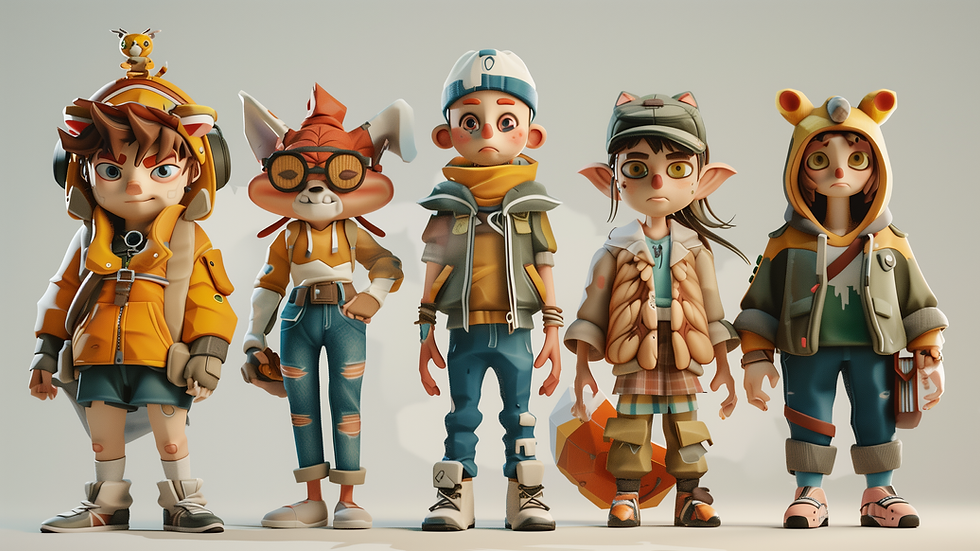
What makes a cartoon character instantly recognizable, emotionally engaging, and practical enough to animate across videos, games, apps, and campaigns?
A good cartoon character design communicates personality before the character speaks. Its silhouette, shapes, colors, face, costume, pose, and movement all support one clear idea. The strongest designs are distinctive at a glance, appropriate for their audience, and built for the places where the character will actually appear.
For brands and creators, visual appeal is only the beginning. A successful design must also survive production: multiple camera angles, facial expressions, animation, motion capture, small mobile screens, real-time engines, and repeated campaigns. That is why Mimic Cartoon connects cartoon character design and 3D animation from the first sketch onward.
Table of Contents
What makes a good cartoon character design?

A good cartoon character design is easy to identify, easy to understand, and difficult to confuse with another character. Viewers should quickly sense who the character is, what emotional energy it brings, and why it belongs in its story or brand world. That clarity comes from intentional choices rather than from adding more detail.
Five qualities usually work together: a distinct silhouette, consistent shape language, a controlled color palette, expressive features, and a design that supports movement. Personality should be visible in posture, proportions, clothing, accessories, and facial structure. A cautious guide may lean inward with softer shapes; an energetic hero may use an open stance, forward angles, and a bolder rhythm.
Good design is also functional. A beautiful front-view illustration can fail when modeled in 3D or asked to perform. Hair may intersect the shoulders, costume pieces may block a joint, or tiny details may disappear on a phone. Production-aware decisions make the character reusable instead of fragile.
This balance of story and function is especially important in 3D cartoon character creation, where concept design, modeling, rigging, animation, and platform delivery form one connected pipeline.
1. Start with purpose, audience, and personality

Begin with a sentence, not a sketch: “This character is a curious digital guide who makes complex technology feel friendly.” That sentence creates a decision filter. If a visual choice does not help communicate curiosity, guidance, accessibility, or technology, it may not belong.
Define the audience just as clearly. Children respond to readable emotions, appealing proportions, and simple visual rhythms. A premium fashion audience may accept sharper silhouettes and subtler expressions. A game character needs immediate role recognition during play. An AI assistant should appear attentive and trustworthy without creating unrealistic expectations.
Next, identify the character’s job. Is it a brand mascot, story protagonist, music-video performer, educator, playable hero, virtual influencer, or conversational avatar? Each job changes the brief. A mascot needs repeatability and brand recognition; a performer needs range; a real-time avatar needs efficient geometry and responsive facial controls.
Write three personality traits and one useful contradiction, such as confident but playful.
Define the primary audience, emotional response, and viewing context.
List the character’s required actions, expressions, outfits, and platforms.
Choose one memorable visual idea that can survive simplification.
When the character represents an organization, a structured cartoon mascot design brief helps turn brand values into visible traits rather than generic decoration.
2. Build a recognizable silhouette with shape language

The silhouette is the outer contour of the character. If you fill the design with solid black, can you still recognize the head, torso, limbs, hairstyle, ears, tail, or signature prop? A strong silhouette reads quickly in a busy frame and remains clear when the character is small.
Shape language gives that silhouette emotional meaning. Circles and rounded forms often feel warm, youthful, or approachable. Squares suggest stability, strength, or reliability. Triangles and sharp angles can communicate speed, danger, precision, or mischief. These are tendencies, not rigid rules; contrast can create personality when used deliberately.
Proportion is one of the fastest ways to create distinction. A larger head supports facial readability, long limbs can imply elegance or awkwardness, and compact proportions can feel energetic or cute. The design should vary large, medium, and small forms instead of distributing detail evenly everywhere.
Test at thumbnail size and compare the character against others in the same world. If every figure has the same head, body, pose, and visual weight, costume changes alone will not create a memorable cast. Distinction should exist in the underlying structure.
If you are still selecting a visual direction, compare the major types of cartoon styles and evaluate which shape vocabulary best supports your story, audience, and production goals.
3. Use color, costume, and detail strategically

Color should organize the design before it decorates it. Choose one dominant color family, one supporting family, and a smaller accent. The palette should remain identifiable under different lighting conditions and should not depend on dozens of nearly equal colors.
Costume and props can reveal occupation, culture, status, history, and habits. The best accessories do more than look interesting: they invite story or action. A messenger bag suggests travel, oversized headphones suggest a relationship with music, and worn protective gear implies experience. Each item should reinforce the character’s role.
Detail needs hierarchy. Concentrate the most informative contrast around the face or another focal area, then reduce noise elsewhere. Fine patterns can work in cinematic close-ups but vanish in social thumbnails, complicate texturing, and increase render cost. A design is not more professional simply because it contains more parts.
For a brand character, verify that the palette works beside the brand identity without turning the character into a walking logo. Strategic echoes—an accent color, material, or shape—usually feel more natural than covering every surface with brand marks.
Mimic Cartoon’s work with 3D cartoon characters for kids’ shows demonstrates why color, readability, and emotional clarity need to support storytelling at every shot size.
4. Design clear expressions, poses, and movement

A character becomes believable through performance. Build expressions from personality rather than treating them as interchangeable emoji. How does this specific character smile, listen, hesitate, celebrate, or become frustrated? A shy smile, a confident grin, and a mischievous smirk use different eyes, brows, head angles, and timing.
Pose language matters as much as the face. A readable pose has a clear line of action, balanced weight, and an unmistakable intention. Hands, shoulders, spine, and head direction should support the same emotion. If the body says “fear” while the face says “calm,” the contradiction should be purposeful.
Create a small expression and pose set early: neutral, happy, concerned, surprised, determined, and speaking or listening. Turn the character around and test extreme poses. This exposes collisions, weak shapes, and facial limitations before the expensive stages of production.
Movement style is part of design. A heavy character may need grounded timing; a playful mascot may use overshoot and squash-and-stretch; a realistic cartoon presenter may require restrained gestures. Motion capture can supply natural rhythm, but animators refine it so the performance matches the stylized proportions.
For a deeper production view, see how cartoon character rigging turns a model into a performer and how controls support repeatable acting.
5. Make the character animation-ready
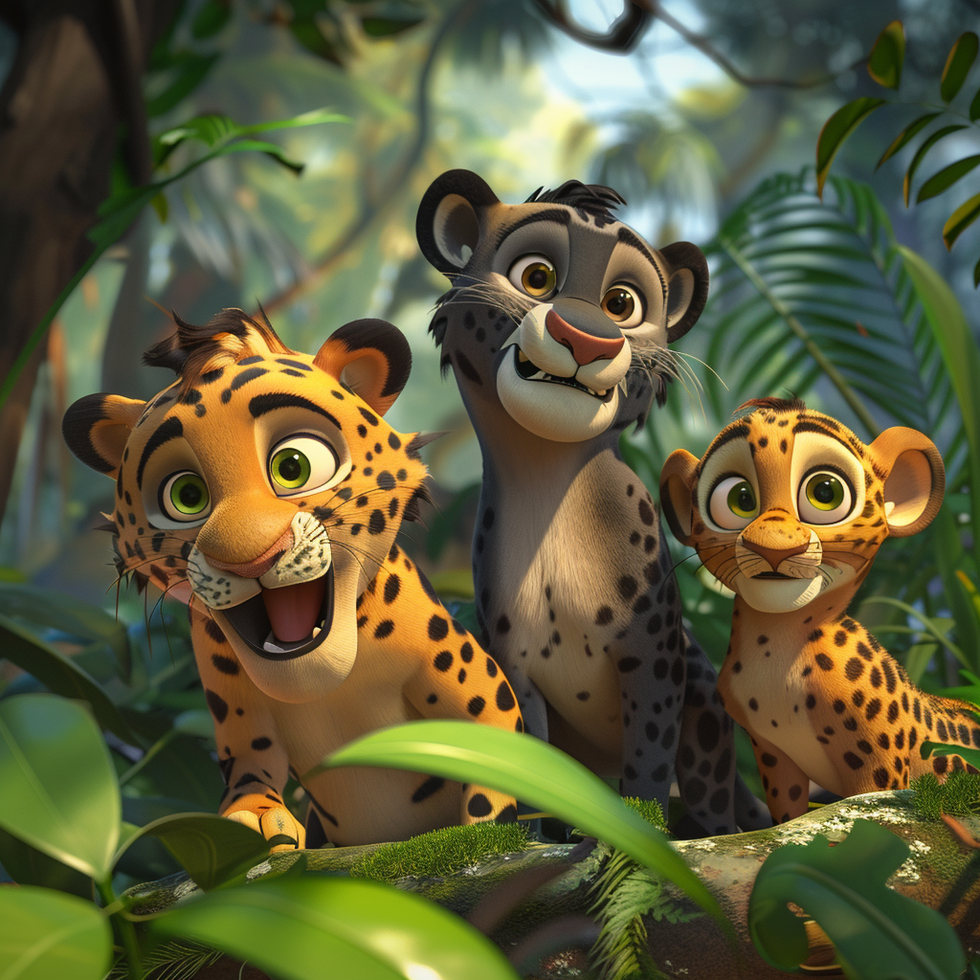
Animation-ready design anticipates topology, joints, deformation, facial controls, hair, clothing, and props. Elbows and knees need enough structural space to bend. Eyes and mouths need shapes that support the required expressions. Loose costume parts need a plan for simulation or controlled secondary motion.
The intended output determines technical priorities. Offline film rendering can support dense geometry and complex materials. Games, mobile apps, VR, and real-time AI characters need optimized polygon counts, texture budgets, efficient rigs, and predictable performance. A single master character may require several versions for different platforms.
Rigging should be discussed during concept development, not after modeling is finished. The animator needs to know whether the character dances, speaks close to camera, changes outfits, holds objects, crawls, flies, or interacts with users. These actions affect the model and control system.
Plan ownership and delivery too. Ask which files, textures, rigs, animation clips, renders, and usage rights are included. A reusable character asset is more valuable when the client understands what can be changed, where it can be deployed, and which production files are available.
The distinction between a static asset and a working performer is also explained in Mimic Cartoon’s guide to 2D vs 3D animation, including workflow and reuse considerations.
6. Test the character across platforms and formats

A character may appear as a cinematic close-up, a website guide, a game avatar, a tiny social profile image, or a live conversational assistant. Test the design in each real context before final approval. A face that works in a large render may become unreadable at 64 pixels, while complex materials may behave differently in a real-time engine.
Check light and dark backgrounds, horizontal and vertical crops, still and moving shots, and common accessibility conditions. Value contrast should keep the face and key features legible. Avoid relying only on red-versus-green differences, and ensure captions or interface labels do not cover the character’s most expressive areas.
Consistency requires a character guide: turnaround views, proportion rules, palette values, materials, expression sheets, pose examples, and notes on what must not change. This helps artists, animators, marketers, and developers use the character without slowly redesigning it from campaign to campaign.
For interactive work, test response latency, idle behavior, eye contact, lip sync, and transitions between actions. The character should feel present even when it is waiting. Small listening motions and believable pauses often matter more than constant exaggerated movement.
See how interactive 3D cartoon characters work across apps and games, or explore AI cartoon characters for brands when the design needs to become a responsive digital personality.
A practical cartoon character design checklist

Before approving a cartoon character design, review it against a short, practical checklist. The goal is not to remove originality; it is to confirm that the creative idea remains clear under real production conditions.
The character’s purpose, audience, personality, and emotional promise are written clearly.
The silhouette is recognizable in black, at thumbnail size, and beside the rest of the cast.
Shape language, proportions, color, costume, props, and surface detail support one coherent idea.
The face and body can communicate the full required expression and pose range.
The design works from all necessary angles and does not hide likely deformation problems.
Modeling, rigging, hair, clothing, and motion requirements are considered before final artwork.
The asset can be optimized for every target platform without losing its identity.
A character guide, delivery formats, revision stages, and usage rights are agreed in advance.
If several checklist items remain uncertain, return to the brief before investing in final modeling and animation. Early questions are inexpensive; late structural changes can affect concept art, topology, textures, rigging, motion, lighting, and integration at once.
When the character will perform in a video, a clear storyboard and animatic workflow can validate staging, screen time, and action before final animation begins.
Frequently asked questions
What are the most important elements of cartoon character design?
The essentials are purpose, personality, silhouette, shape language, proportions, color, expression, pose, costume, and production readiness. They should reinforce one clear character idea.
How do you make a cartoon character recognizable?
Use a distinct silhouette, one or two signature features, controlled colors, and consistent proportions. Test the design as a black shape and at thumbnail size.
Should a cartoon character design be simple or detailed?
It should be as simple as the intended use allows and as detailed as the story requires. Clear hierarchy matters more than the raw number of details.
What makes a cartoon character appealing?
Appeal comes from clarity, personality, expressive shapes, visual rhythm, and emotional connection. Appealing does not always mean cute; villains and creatures can be compelling too.
How does shape language affect character design?
Rounded forms often feel friendly, squares stable, and sharp triangles energetic or dangerous. Designers combine and contrast these associations to communicate personality quickly.
What should be included in a character design brief?
Include the audience, role, personality traits, story context, style references, actions, expressions, outfits, target platforms, schedule, deliverables, and usage requirements.
When should rigging be considered in character design?
Rigging should be considered during concept development. Required movement, facial performance, clothing, props, and platform constraints can change the design itself.
Can one cartoon character be used for video, games, and AI?
Yes, if multi-platform use is planned early. The character may need different geometry, textures, rigs, animation systems, and exports while preserving the same identity.
How long does professional cartoon character design take?
Timing varies with complexity, number of concepts, feedback rounds, expression sheets, turnaround views, and whether the project includes 3D modeling, rigging, and animation.
Do brands own a custom cartoon character after production?
Ownership depends on the contract and licensing terms. Confirm usage rights, source files, territories, media, duration, exclusivity, and modification rights before production starts.
Conclusion
What makes a good cartoon character design is not a single trick. It is alignment: personality matches shape, color supports story, expressions support performance, and the final asset works wherever audiences will meet it. When those decisions reinforce each other, a character becomes recognizable, reusable, and emotionally convincing.
Ready to turn an idea into an expressive 3D character? Explore Mimic Cartoon’s character design and animation services or contact the Berlin studio to discuss concept design, modeling, rigging, motion capture, animation, and platform-ready delivery.


Comments