
AI Cartoon Characters: How Interactive 3D Avatars Bring Stories and Brands to Life
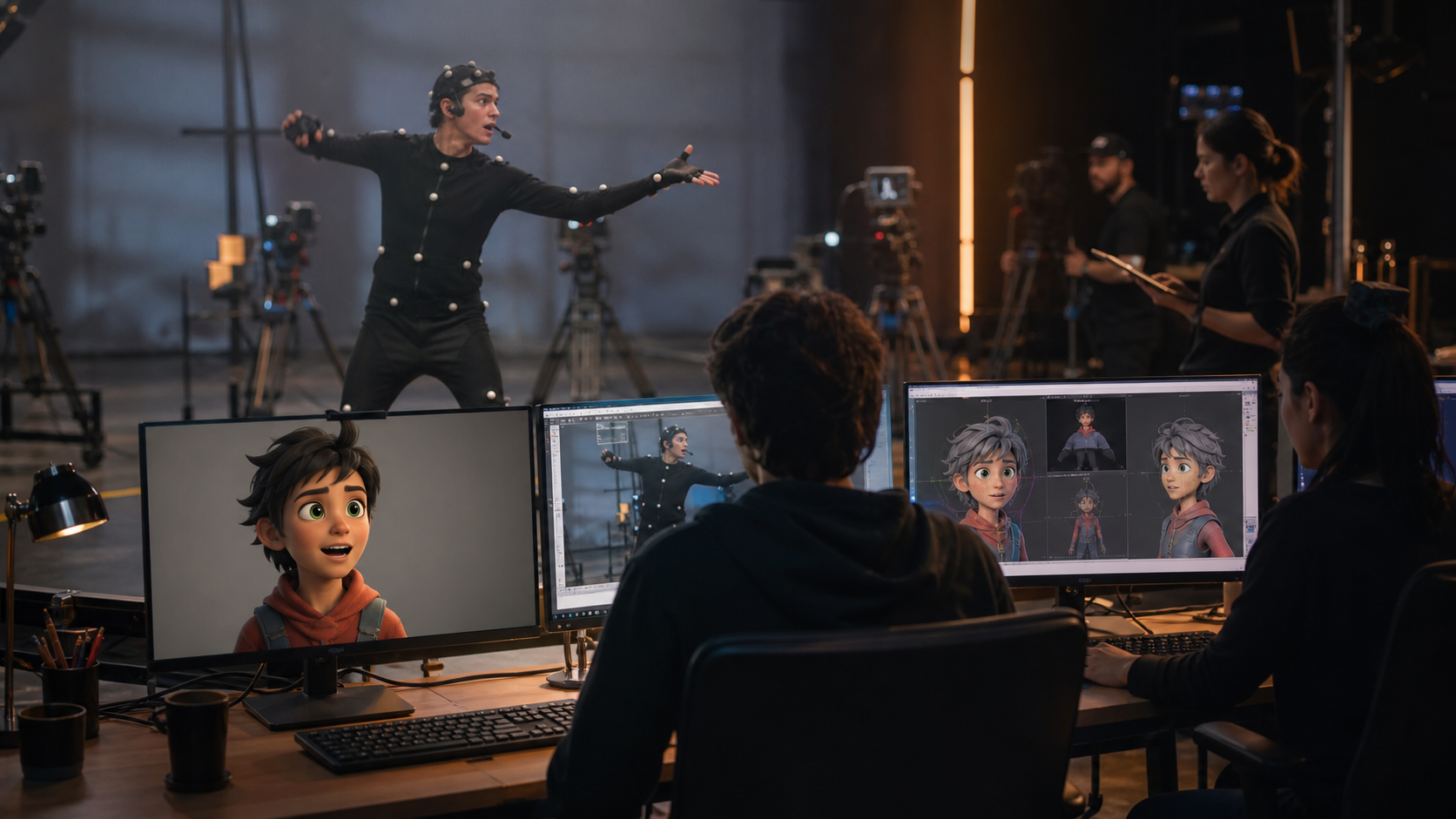
AI cartoon characters are quickly becoming more than novelty mascots. When a character can listen, react, speak, move, and remember the tone of a brand or story world, it becomes a reusable digital personality instead of a one-time animation asset.
For studios, brands, educators, game teams, and entertainment companies, the opportunity is not simply to generate a talking image. The real value comes from combining thoughtful character design, animation craft, motion capture, facial performance, platform integration, and responsible conversational AI.
That blend sits naturally at Mimic Cartoon, where 3D cartoon character creation, motion capture, scanning, animation, VFX, XR, and AI avatar work all connect around one goal: making digital characters feel alive, useful, and memorable.
Table of Contents
What Are AI Cartoon Characters?
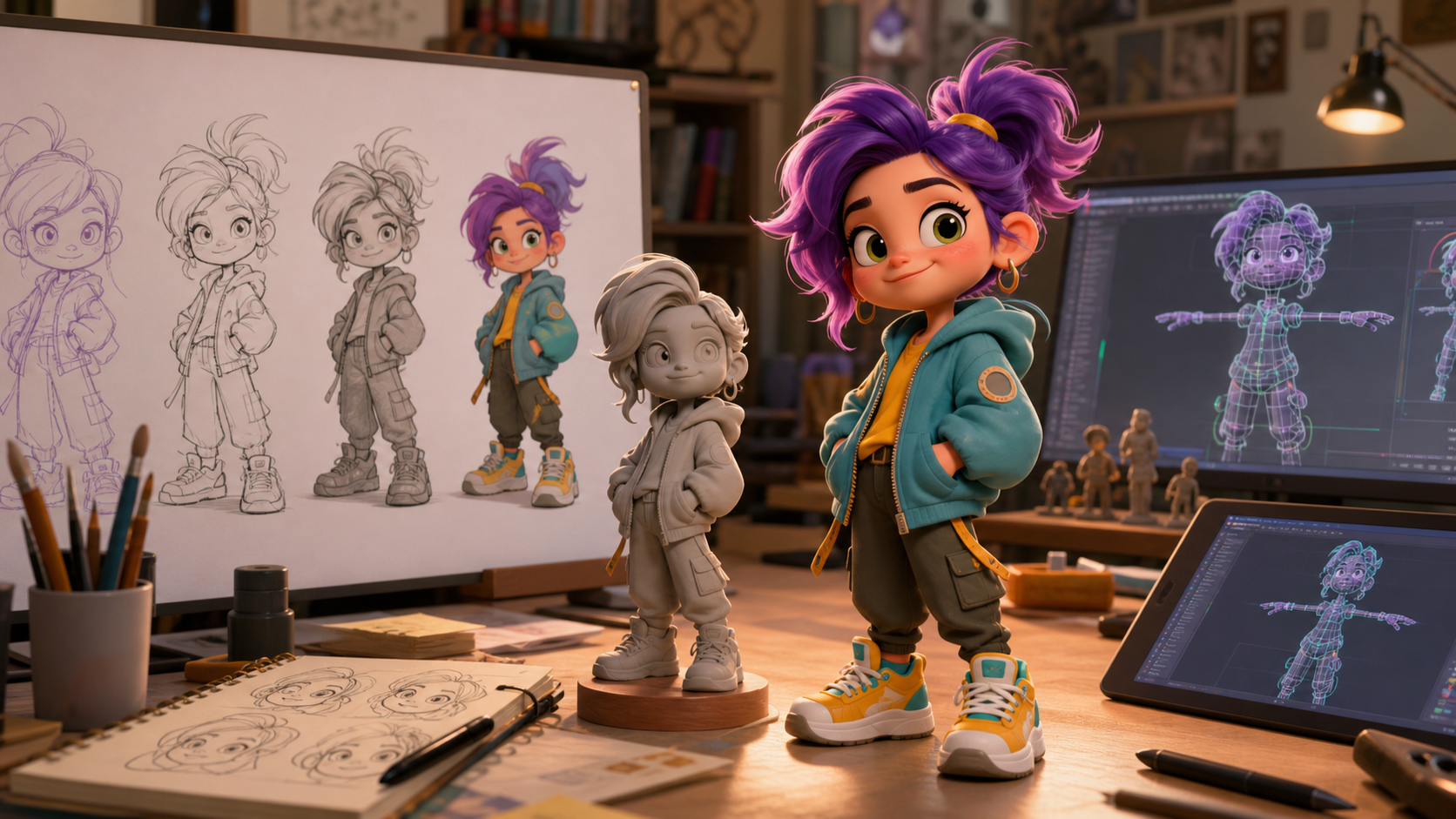
An AI cartoon character is a designed digital character that can be animated, voiced, and connected to an intelligent conversation system. It may appear as a website guide, game NPC, virtual presenter, brand mascot, tutor, children's media character, or interactive companion inside an immersive environment.
The AI part should not replace the craft of character creation. It should extend it. A strong character still needs a clear visual style, consistent personality, readable expressions, animation-ready rigging, and a purpose that fits the audience. Mimic Cartoon's guide to 3D cartoon character creation is a useful foundation because every interactive avatar begins with the same fundamentals: design, model, rig, animate, and prepare for real use.
A polished AI cartoon character usually combines several layers: a 3D model, facial controls, body animation, lip sync, voice, personality rules, knowledge content, safety boundaries, and deployment logic. When those layers work together, the character can answer questions, guide a viewer, perform in real time, or appear in repeatable video content without losing its identity.
AI Cartoon Characters vs Traditional Animated Characters
Traditional animated characters and AI-powered cartoon characters share a creative base, but they are built for different kinds of audience interaction. A traditional character performs inside a finished scene. An AI character may need to respond to unpredictable users, switch topics, maintain brand tone, and still feel visually consistent.
Quick Comparison
Traditional animation: best for authored stories, films, shorts, ads, music videos, and scenes where timing is fully controlled.
AI cartoon characters: best for conversations, guides, interactive experiences, learning tools, real-time NPCs, and recurring social content.
Hybrid production: best when a brand needs both cinematic content and an interactive version of the same character.
That hybrid approach is often the most practical. A character can appear in a planned brand film, then become a website helper, product explainer, or interactive host. If you are weighing the difference between character motion and visual effects, Mimic Cartoon's article on VFX and animation gives helpful context for how performance and world-building support each other.
Why Brands and Studios Use Interactive 3D Avatars
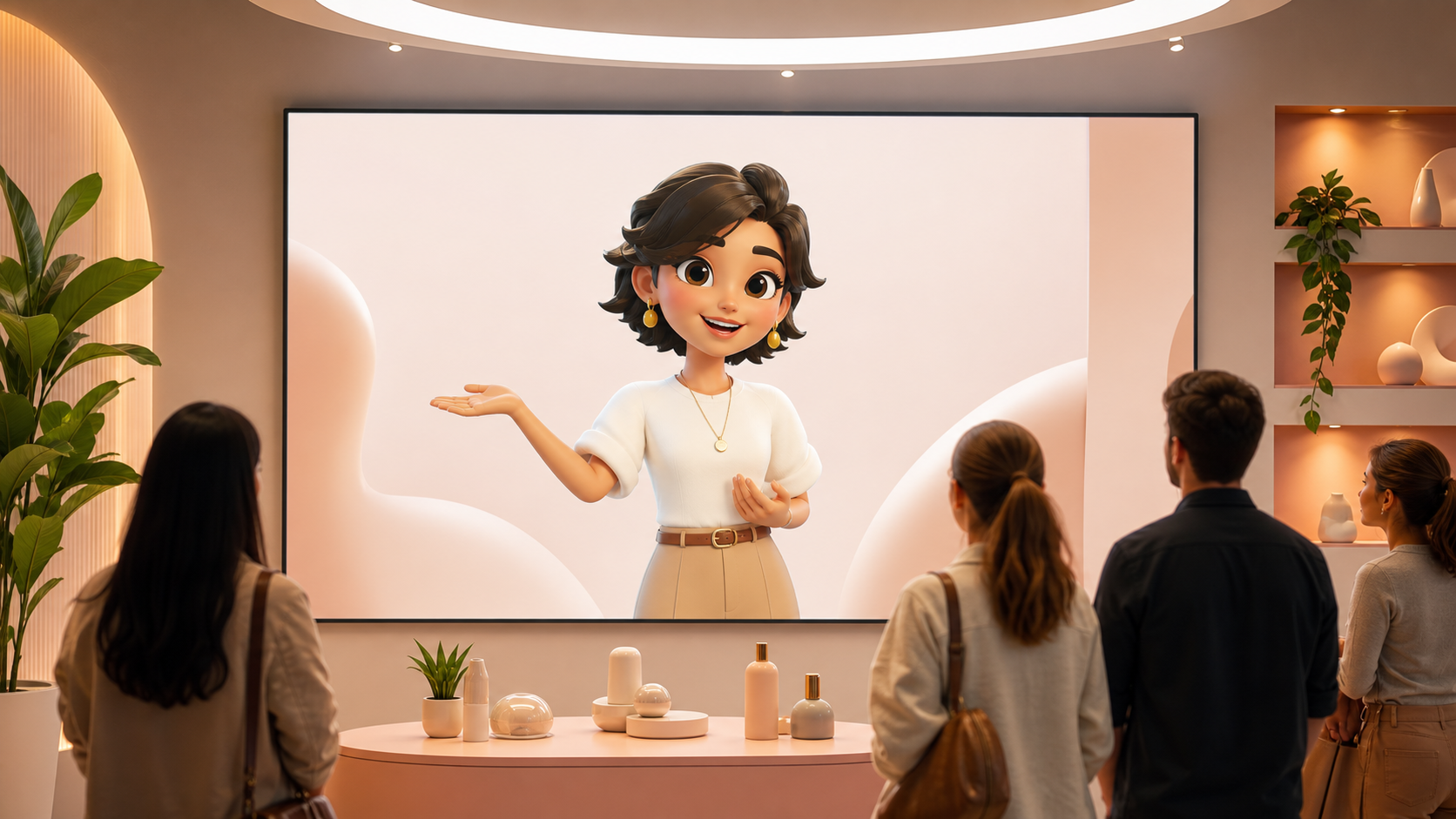
The main benefit is continuity. A character gives a brand or story world a recognizable face across video, web, apps, live events, games, and AI interfaces. Instead of rebuilding identity for every campaign, the same avatar can adapt to many moments while staying familiar.
Memorability: audiences often remember a character faster than a product description or abstract brand promise.
Engagement: an expressive avatar can make onboarding, support, education, and storytelling feel more personal.
Reuse: a properly built 3D character can appear in stills, videos, interactive scenes, XR spaces, games, and AI tools.
Consistency: a designed personality can protect tone, behavior, and visual identity across repeated interactions.
This is especially powerful for children's content, entertainment, education, ecommerce, hospitality, museums, games, and digital products that want a guide rather than a static interface. Mimic Cartoon's technology page shows how AI, 3D scanning, motion capture, VR, and VFX can support those kinds of experiences.
How the Production Pipeline Works
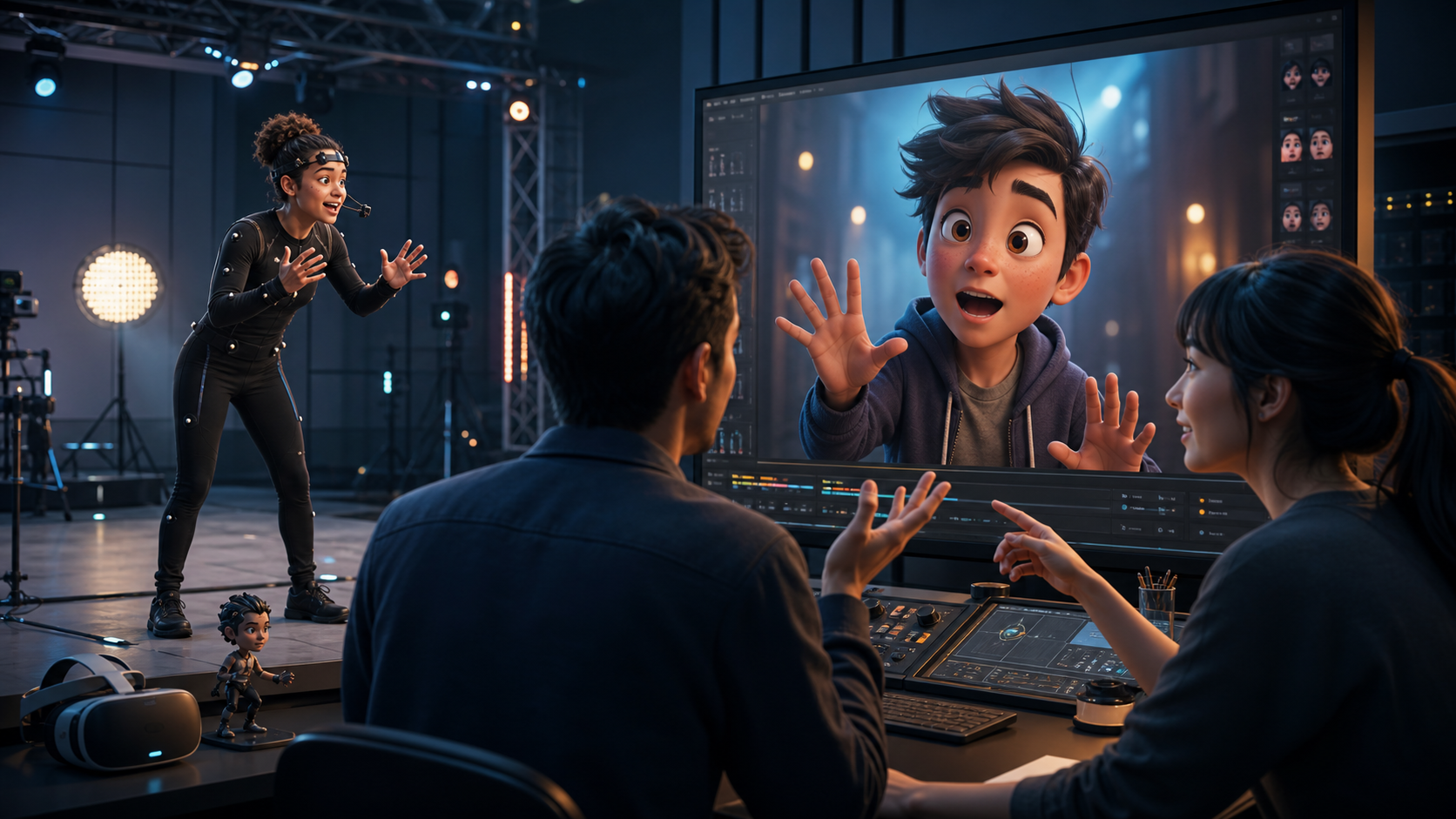
A successful AI cartoon character begins with the same question as any strong character project: what does this personality need to do? The answer shapes the design, rig, animation system, conversation model, and final platform.
1. Define the role: mascot, guide, presenter, NPC, tutor, customer-support avatar, virtual influencer, or story character.
2. Design the character: silhouette, proportions, costume, expressions, color, audience fit, and brand personality.
3. Build the 3D asset: model, texture, rig, facial controls, body controls, and platform-ready optimization.
4. Capture or animate performance: use keyframe animation, facial capture, motion capture, or a hybrid workflow depending on realism and schedule.
5. Connect interaction: voice, language model, knowledge base, safety rules, live deployment, analytics, and escalation paths where needed.
For movement-heavy characters, motion capture in animation can give the avatar a believable physical rhythm. For cinematic scenes, VFX and CGI craft still matter. If you are comparing these terms, the article on CGI vs animation helps explain where rendered imagery and character performance overlap.
Use Cases Across Brands, Games, Education, and Entertainment
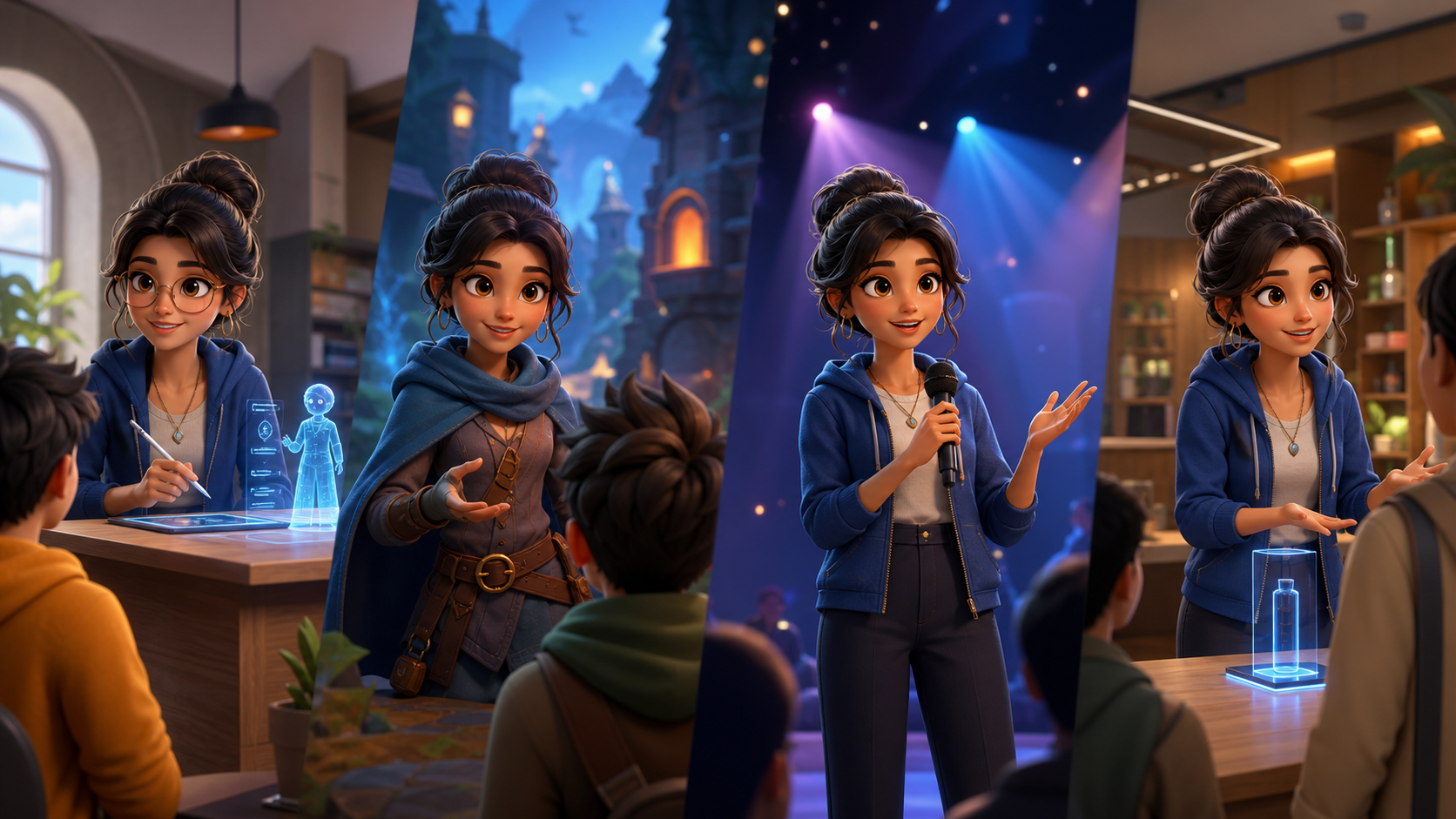
Interactive AI cartoon characters are useful wherever a user benefits from personality, guidance, repeat contact, or story continuity. The use case should lead the design. A children's character needs safety, warmth, and readability. A game NPC needs memory, voice, movement, and world rules. A brand mascot needs consistency and clear boundaries around what it can promise.
Customer Journey Fit
Discovery: a character introduces the brand, explains a story world, or helps visitors understand the experience quickly.
Consideration: the avatar answers common questions, compares options, or points users toward services, demos, or examples.
Onboarding: the character walks users through a product, lesson, game world, museum exhibit, or interactive website.
Retention: the same personality returns in social content, updates, seasonal campaigns, or ongoing AI conversations.
For connected worlds and cross-brand character ecosystems, the Mimicverse is a natural reference point. It shows how character creation can extend into digital humans, AI avatars, immersive marketing, games, fashion, education, and wider production services.
Data, AI, and Platform Requirements
The technical requirements depend on how the character will be used. A video-first avatar needs dependable animation and rendering. A web assistant needs real-time performance and careful conversation design. A game character needs engine integration, memory, latency planning, and world-specific behavior rules.
Practical Checklist
Character assets: model, textures, rig, blendshapes, facial expressions, voice profile, and animation library.
Brand and story inputs: tone guide, audience profile, approved language, forbidden claims, story canon, and service details.
AI configuration: knowledge base, safety rules, response style, multilingual needs, fallback behavior, and human handoff rules.
Platform delivery: website, mobile app, game engine, XR space, social video workflow, or event installation.
Measurement plan: engagement, conversation quality, completion rate, user satisfaction, retention, and conversion goals.
For character projects that involve lifelike performance or scanning, Mimic Cartoon's About page gives background on the studio's digital human and character production experience, including motion capture, scanning, character modeling, facial rigging, animation, AI integration, and XR assets.
Implementation Steps and Mistakes to Avoid
The best AI cartoon character projects do not start with tool selection. They start with the audience, the character's job, and the kind of interaction the user should have. Once that is clear, production decisions become easier and less expensive to correct.
Recommended Launch Path
Start with a narrow use case, such as a website guide, explainer host, learning companion, or demo NPC.
Create a character bible covering personality, speaking style, visual rules, audience expectations, and boundaries.
Build the 3D character for the final platform, not just for a pretty render.
Test voice, lip sync, response timing, body language, and user comprehension together.
Measure real interactions, refine the knowledge base, and add new animation states only when the user need is clear.
Mistakes to Avoid
Treating the avatar as a chatbot skin instead of a character with movement, tone, and purpose.
Choosing photorealism when a stylized cartoon character would feel warmer, safer, or more memorable.
Launching without clear privacy language, fallback behavior, or limits on what the character can claim.
Ignoring performance details like latency, mobile rendering, voice delay, and expression timing.
If the project is primarily storytelling-led, read Mimic Cartoon's article on character development in animation and the guide to how animated movies are made. Both reinforce the same lesson: technology works best when it serves character, story, and audience clarity.
KPIs, Privacy, and Responsible AI
Because AI cartoon characters interact with people, trust matters as much as animation quality. Users should understand when they are interacting with AI, what data may be used, what the character can and cannot do, and how to reach a human when the conversation moves beyond the avatar's role.
KPIs to Track
Engagement: interaction starts, average session length, return visits, and completed conversations.
Quality: answer accuracy, fallback rate, user satisfaction, escalation rate, and moderation flags.
Business impact: demo requests, signups, support deflection, lesson completion, purchases, or campaign lift.
Creative performance: character recall, sentiment, social reuse, animation consistency, and brand-fit feedback.
Responsible AI design also protects the character itself. A mascot, tutor, or virtual performer should not improvise beyond approved knowledge, impersonate a real person without consent, or create confusing emotional expectations. The safest projects define the character's role clearly and make its boundaries visible in both dialogue and experience design.
Future Trends in AI Cartoon Character Production
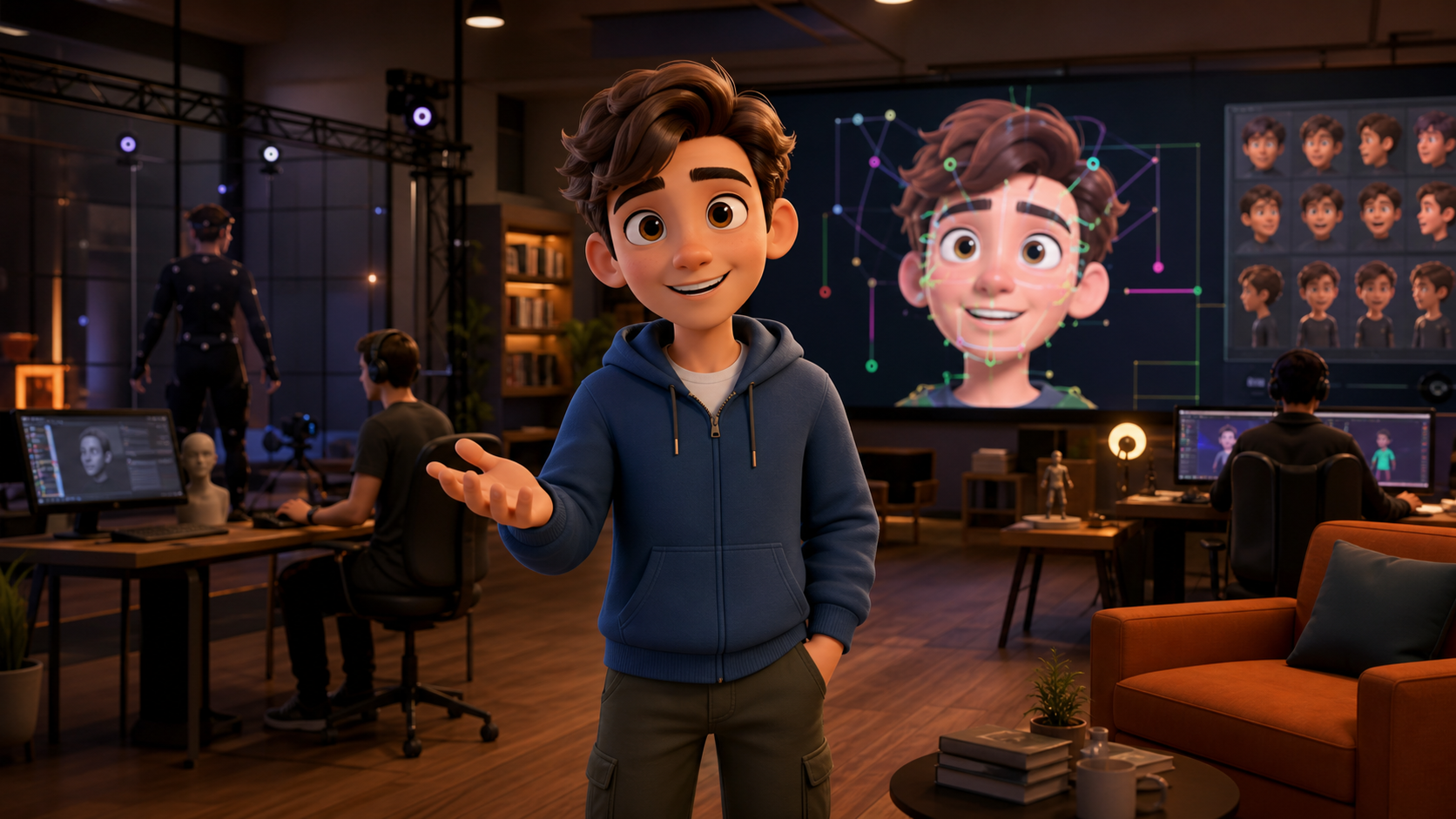
The next wave of AI cartoon characters will be more embodied, more consistent, and more connected to real production pipelines. Instead of isolated avatar demos, teams will expect reusable characters that can move between cinematic content, interactive websites, real-time engines, social video, and immersive spaces.
Real-time performance will improve, making avatars more responsive on websites, mobile devices, and live installations.
Stylized characters will keep growing because they can avoid uncanny-valley problems while still feeling expressive and personal.
Character consistency will become a major production advantage as brands want the same mascot across films, ads, chat, games, and XR.
Story worlds will become interactive, letting audiences talk to characters instead of only watching them perform.
The history of animation has always been shaped by new tools, from hand-drawn shorts to CGI, motion capture, real-time engines, and now AI. Mimic Cartoon's guide to the history of cartoon animation is a reminder that technology changes, but memorable characters still depend on personality, performance, and story.
FAQs
What is an AI cartoon character?
An AI cartoon character is a designed digital character that can be animated, voiced, and connected to conversational AI so it can interact with users, guide experiences, or appear in repeatable content.
How is an AI cartoon avatar different from a chatbot?
A chatbot is mainly a text or voice interface. An AI cartoon avatar adds a visual character, performance, expressions, animation, voice, and personality design, making the interaction feel more embodied and memorable.
Can a brand mascot become an AI cartoon character?
Yes. A brand mascot can become interactive if it is redesigned or prepared with a 3D model, rig, animation system, voice, personality rules, approved knowledge, and safe interaction boundaries.
Where can interactive 3D avatars be used?
They can be used on websites, apps, games, XR experiences, museums, learning platforms, customer-support flows, brand campaigns, music videos, social content, and live digital installations.
Do AI cartoon characters need motion capture?
Not always. Motion capture is useful when the character needs realistic body movement, performance, dance, action, or live physicality. Keyframe animation can be better for stylized timing or simpler production needs.
Are stylized cartoon avatars better than photorealistic AI avatars?
It depends on the audience and use case. Stylized avatars often feel warmer, more flexible, and less uncanny. Photorealistic avatars can work well for premium, humanlike, or digital-human experiences when trust and consent are handled carefully.
What data does an AI cartoon character need?
It needs character assets, brand or story rules, a knowledge base, approved language, safety boundaries, conversation goals, platform requirements, and analytics definitions for measuring success.
Can AI cartoon characters be used for children's content?
Yes, but children's content needs especially careful design. The character should use age-appropriate language, safe topics, clear moderation, privacy-aware data handling, and a visual style that supports trust and readability.
How long does it take to create an interactive AI cartoon character?
Timeline depends on complexity. A simple prototype can be faster, while a fully custom 3D character with rigging, facial controls, animation, voice, AI knowledge, testing, and deployment usually needs a staged production plan.
How should a company start an AI avatar project?
Start with a focused use case, define the audience, write the character's personality rules, choose the deployment platform, and build a prototype before expanding into larger campaigns or multiple channels.
Conclusion
AI cartoon characters work best when they are treated as characters first and technology second. The stronger the design, story logic, movement, voice, and audience fit, the more useful the AI layer becomes.
For brands and studios, the goal is not just to make an avatar talk. The goal is to create a digital personality that can guide, perform, teach, entertain, and return across many touchpoints without losing its identity.
Need this service for your project? Explore Mimic Cartoon's 3D cartoon animation services or contact the studio to discuss custom AI cartoon characters, interactive 3D avatars, motion capture, animation, and platform-ready character production.


Comments