
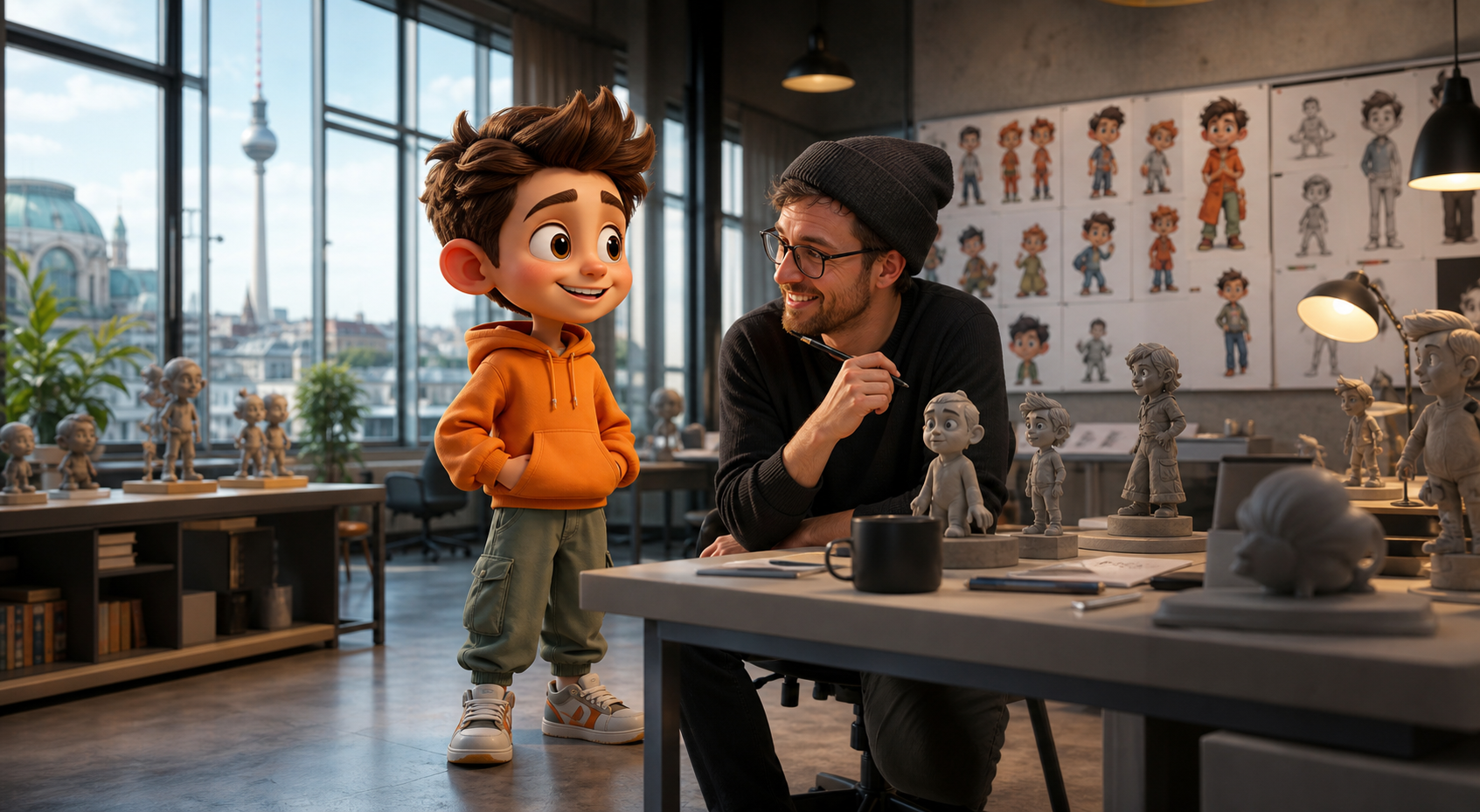
Interactive 3D Cartoon Characters for Apps and Games

Can one 3D cartoon character make a digital product feel more human, playful, and memorable?
For many brands, the answer is yes. Interactive 3D cartoon characters can guide users through a website, welcome players into a game world, explain a product inside an app, or turn a campaign into a character-led experience people remember after the screen closes.
At Mimic Cartoon, character work sits at the intersection of classic cartoon warmth and modern 3D realism. The studio combines character craftsmanship, motion capture, 3D scanning, AI character workflows, VR/XR thinking, and platform integration to help brands move from a flat idea to a living digital presence.
Table of Contents
What Makes a 3D Cartoon Character Interactive?

An interactive 3D cartoon character is not only a model that looks good in a render. It is a digital character prepared to respond, move, guide, perform, or appear inside a real user journey. That journey might happen on a homepage, inside an app, in a game engine, through an AR activation, or in a live AI avatar experience.
The difference is intention. A static mascot can build recognition, but an interactive character creates a relationship. It can gesture toward a call to action, react to user choices, answer questions, demonstrate a feature, or carry a visual identity across multiple digital touchpoints.
That is why the best projects start with both story and system. The character needs a personality, but it also needs a practical technical plan. Mimic Cartoon’s 3D cartoon animation services cover character creation, platform integration, motion integration, and 3D scanning so the same creative idea can become a usable asset instead of a one-off visual.
Visual identity: the character should feel unmistakably connected to the brand.
Performance: facial expression, body movement, timing, and gesture need to support the character’s role.
Technical readiness: topology, rigging, optimization, and formats must match the platform.
Why Brands Use Interactive Cartoon Characters

Brands use cartoon characters because people remember characters more easily than feature lists. A strong character can soften a technical product, make onboarding less dry, create continuity across campaigns, and give a brand a recognizable face without relying on a celebrity or spokesperson.
The interactive layer makes that effect stronger. Instead of appearing once in a video, the character can meet users where they already are. It can show up in a website product tour, a mobile app tutorial, a game trailer, a music video campaign, a virtual event, or a customer support flow.
This is closely related to the role of an animated brand mascot, but it pushes the mascot beyond a logo extension. The character becomes a tool for experience design. It can carry brand tone, emotional cues, and product meaning at the same time.
For attention: movement, expression, and personality help users notice key moments.
For trust: a consistent character can make complex interactions feel friendly and guided.
For scalability: one well-built character can support ads, apps, games, social content, and XR.
Where Interactive Characters Work Best

Interactive 3D cartoon characters work best when they have a clear job. The character should not decorate the interface for its own sake. It should make something easier, more emotional, more memorable, or more fun.
On websites, a character can introduce a product, guide visitors toward a service, or give a brand a warmer first impression. In apps, it can coach users through setup and reduce the fatigue of instructions. In games, it can become a playable hero, non-player character, companion, trainer, or promotional character. In advertising, it can move across short-form video, product launches, retail screens, and immersive brand activations.
The strongest use cases connect to a real audience need. For onboarding and training, see how 3D cartoon animation can improve customer onboarding and training. For entertainment and campaign storytelling, Mimic Cartoon’s work around music video animation shows how a character can support emotional pacing as well as visual impact.
How Production Turns a Character Into a Platform-Ready Asset
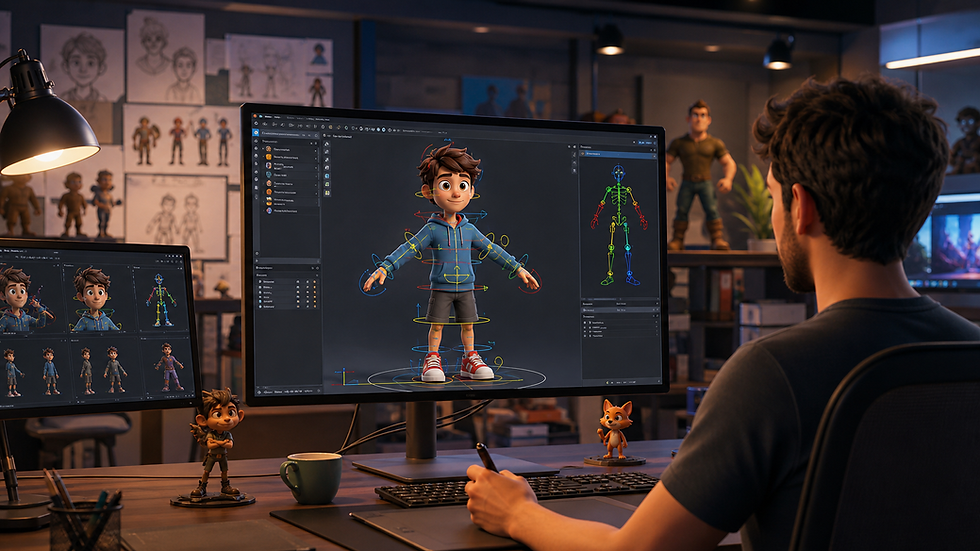
A platform-ready cartoon character goes through more than modeling. It needs a production pipeline that considers where the character will appear, how close the camera gets, whether users can interact with it, and how much performance the target platform can handle.
The process often starts with visual development: silhouette, color, proportions, facial language, and wardrobe or surface detail. Then comes 3D modeling, texturing, rigging, facial setup, animation tests, and optimization. If the character is meant to perform naturally, cartoon character rigging and facial controls are just as important as the model itself.
Mimic Cartoon also brings production knowledge from AI and XR technology, including custom AI characters, motion capture, photogrammetry-based 3D scanning, VR technology, and VFX. That helps the team think beyond the render and toward the complete experience.
For websites and apps: file size, loading time, interaction states, and visual clarity matter.
For games: rigs, animations, textures, and engine compatibility need to be planned early.
For AI avatars: expression, voice, conversation style, and response behavior shape believability.
What to Plan Before You Build

Before a brand commissions an interactive 3D cartoon character, it helps to define the character’s purpose. A character for a children’s learning app needs different behavior than a character for a fintech onboarding flow, a fashion activation, or a game trailer.
Start with the audience, then the interaction. Is the character there to teach, entertain, persuade, reassure, or represent the brand? How often will users see it? Will it speak, gesture, react, guide, or simply perform? These choices affect design, rigging, animation, AI behavior, and platform optimization.
Facial animation is especially important because small expressions carry a lot of emotional information. Mimic Cartoon’s article on facial animation for 3D cartoon characters is a useful starting point for understanding why eye shape, mouth movement, brows, timing, and personality need to work together.
Brand role: mascot, guide, avatar, entertainer, narrator, teacher, or game character.
Platform role: website, app, game engine, social campaign, AR, VR, or AI interface.
Production scope: single launch asset, reusable character system, or long-term content library.
How Mimic Cartoon Helps Bring Interactive Characters to Life

Mimic Cartoon is built for projects where character, story, and technology need to meet. The studio creates vibrant 3D characters, but it also understands how those characters can function inside platforms, campaigns, XR environments, games, and AI experiences.
That background comes from Mimic Productions’ broader world of digital humans, scanning, motion capture, animation, AI integration, and immersive media. The Mimicverse ecosystem connects specialist studios across digital humans, AI avatars, VFX, XR, gaming, education, robotics, advertising, and immersive business experiences.
If your goal is a character that can live across a website, app, game, and campaign system, that combined perspective matters. You need artists who understand personality and technicians who understand how performance, formats, and interactive environments work. Learn more about the team and production background on the About Mimic Cartoon page, or explore more character strategy in the Mimic Cartoon blog.
FAQ
What is an interactive 3D cartoon character?
It is a 3D cartoon character designed to appear inside a user experience, such as a website, app, game, AR activation, AI avatar, or onboarding flow. It can guide, react, perform, speak, or support a brand story.
How is an interactive character different from a mascot?
A mascot often represents the brand visually. An interactive character goes further by participating in digital experiences, responding to context, explaining ideas, or moving through platform-specific interactions.
Can a 3D cartoon character be used in an app?
Yes. 3D cartoon characters can support app onboarding, feature education, rewards, tutorials, customer support, and playful interface moments when they are designed and optimized for the app environment.
Can cartoon characters be integrated into games?
Yes. A character can be prepared for game engines as a hero, companion, NPC, trainer, branded crossover character, or promotional asset, depending on the required rig, animation set, and platform.
Do interactive characters need motion capture?
Not always, but motion capture can add natural timing, body language, and expressive performance. It is especially useful when a character needs believable gestures, dance, action, or human-like movement.
What platforms can use a 3D cartoon character?
Common platforms include websites, mobile apps, games, social campaigns, product demos, AR and VR experiences, digital signage, AI avatar interfaces, and entertainment content such as music videos.
What should a brand prepare before starting?
Prepare the character’s purpose, audience, brand personality, target platforms, interaction needs, expected animation scope, and any technical requirements such as app, game engine, AR, or AI integration.
Does Mimic Cartoon create custom 3D cartoon characters?
Yes. Mimic Cartoon creates custom 3D cartoon characters for storytelling, apps, games, platforms, music videos, brand experiences, AI character workflows, and immersive digital environments.
Conclusion
Interactive 3D cartoon characters give brands a way to turn personality into an experience. When the character is designed with purpose, performance, and platform readiness, it can support apps, games, websites, campaigns, XR activations, and AI experiences without losing its emotional core.
Ready to build a character that can move, guide, perform, and connect across platforms? Explore Mimic Cartoon’s services or contact the Berlin studio to bring your interactive 3D cartoon character to life.


Comments