
Cartoon Mascot Design: From Brand Personality to Animated 3D Character
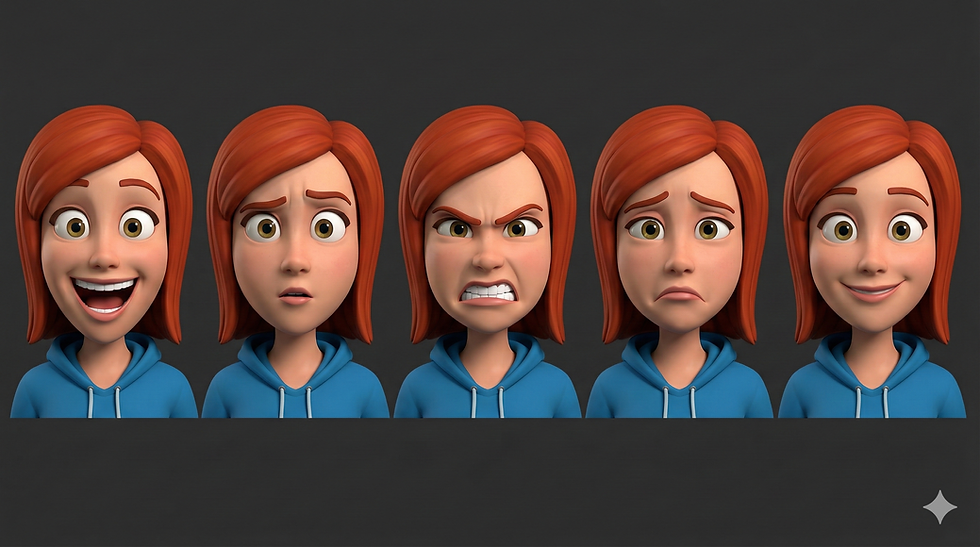
Cartoon mascot design is where brand strategy, character development, visual style, and animation production meet. A strong mascot is not simply a cute drawing placed beside a logo. It is a repeatable brand character that can explain ideas, create emotion, guide customers, appear in campaigns, and grow into an animated 3D performer.
For Mimic Cartoon clients, the best mascot projects usually begin before modeling or animation. The early work defines personality, audience, voice, behavior, and how the character should move across formats. That strategy then supports design, rigging, performance, rendering, and long-term reuse.
This expanded guide explains how to turn brand personality into a mascot that can work as an illustrated icon, animated 3D character, explainer host, social media performer, website guide, game character, or interactive AI avatar.
Table of Contents
What cartoon mascot design includes
Cartoon mascot design includes the full planning system behind a character: brand traits, audience insight, visual references, sketch exploration, color rules, expression sheets, pose libraries, motion tests, voice direction, and production requirements. The result should be more than one polished pose. It should be a character system.
A mascot must be readable as a still image and expressive in motion. It should work in a website hero image, a square social post, a vertical video, a product explainer, a game environment, and a real-time interaction. That is why the earliest design choices matter so much.
Personality: what the mascot believes, how it behaves, and how it should make the audience feel.
Silhouette: whether the character can be recognized quickly without small details.
Expression range: the emotions, reactions, and facial poses needed for the campaign.
Production readiness: whether the design can become a 3D model, rig, animation library, and interactive avatar.
If a brand already knows it wants an animated performer, the design should connect directly with 3D cartoon character creation rather than staying at the flat illustration stage for too long. That makes later modeling, texturing, rigging, and rendering more efficient.

From brand personality to mascot personality
The best mascots feel inevitable. They seem to belong to the brand because their shape, posture, voice, and behavior reflect the company’s personality. A playful education brand may need a curious guide. A technology brand may need a clever but approachable character. A premium entertainment brand may need a mascot with sharper style and more cinematic presence.
The translation from brand to character is practical. Abstract traits become visible design choices. Friendly may become rounded forms and open gestures. Bold may become a broader stance and confident timing. Innovative may become unexpected props, futuristic materials, or a movement style that feels quick and intelligent.
Useful brand-to-character translations
Helpful brand: warm eyes, open hands, simple costume, clear facial reactions.
Expert brand: controlled posture, precise gestures, cleaner details, calmer performance.
Youthful brand: elastic poses, bright contrast, quick timing, bigger expressions.
Premium brand: refined silhouette, restrained colors, elegant motion, fewer noisy details.
This is also where character development in animation becomes important. A mascot with a clear emotional range is easier to animate because the team knows what the character would do, what it would never do, and how it should react under pressure.
Why mascots work for brands
A brand mascot gives the audience someone to remember. Logos identify. Mascots interact. They can explain a product, host a launch video, guide a visitor through a website, appear in a tutorial, react to customer questions, or become the face of a campaign series.
The business value comes from consistency. Once a character is designed well, each new use builds familiarity. A customer who sees the mascot in a short video, then in an explainer, then in a landing page, starts to connect the same emotional signal with the brand.
Recall: people remember a character faster than a generic campaign visual.
Tone: the mascot makes complicated messages warmer and easier to understand.
Reuse: the same asset can support ads, explainers, social content, onboarding, and events.
Performance: animated mascots can show emotion, demonstrate features, and respond to context.
For story-led campaigns, the mascot can also connect with music video animation, entertainment shorts, branded episodes, or creator-led content where personality matters as much as polish.

2D mascot, 3D mascot, or AI avatar
Mascot format should follow the job the character needs to do. A 2D mascot may be perfect for packaging, stickers, and simple social graphics. A 3D mascot is stronger when the character needs lighting, depth, cinematic movement, product demonstrations, or reusable animation assets.
An AI avatar is another step. It combines character design with interactive behavior, voice rules, safety boundaries, and sometimes real-time animation. That direction only works when the mascot has a stable personality system and a production-ready rig.
Choose 2D when the need is fast visual recognition, graphic charm, and lightweight brand assets.
Choose 3D when the mascot must perform, turn, gesture, interact with products, or appear in cinematic environments.
Choose an AI avatar when the mascot needs dialogue, personalized guidance, or real-time engagement.
If the decision is still open, compare the production needs in 2D vs 3D animation and then plan the mascot around the formats that matter most. If interaction is a serious goal, review how AI cartoon characters use personality, animation, and conversational design together.
The mascot design workflow
A professional mascot workflow moves from strategy to production in controlled stages. Each stage answers a different question, and skipping any one of them can make the final character harder to animate or harder to use across campaigns.
Discovery: define audience, use cases, emotional tone, visual references, and campaign goals.
Concept sketches: explore silhouette, proportions, costume, props, face shape, and attitude.
Style frame: test color, materials, line quality, lighting, and the final visual direction.
Expression sheet: create smiles, doubts, surprise, confidence, curiosity, and reactions.
3D build and rig: model, texture, rig, test deformation, and prepare animation controls.
Motion test: check walk cycles, gestures, facial timing, performance range, and camera readability.
When a mascot will act in videos or interactive scenes, animation planning should begin early. Mimic Cartoon’s guide to how animated movies are made shows why storyboards, animatics, rigging, lighting, and rendering are part of the same production chain.

Where brands use animated mascots
Mascots are useful because they can move through the customer journey. The same character can introduce the brand, simplify a product, keep attention during onboarding, and bring continuity to support or community content.
Awareness: short social clips, launch teasers, animated ads, and memorable campaign moments.
Consideration: product explainers, feature walkthroughs, pitch videos, and comparison content.
Conversion: landing page hosts, interactive demos, sales presentations, and event screens.
Retention: tutorials, onboarding guides, update explainers, support content, and loyalty campaigns.
The strongest use case is usually not one isolated video. It is a repeatable character system. A mascot can appear in an explainer today, a game-style demo tomorrow, and an AI-led product guide later if the original design supports those transitions.
Brief checklist, mistakes, and KPIs
A good mascot brief reduces wasted design time. It gives the creative team enough strategy to make confident choices while leaving room for exploration. It should also define what success means after the mascot is launched.
Include this in the brief
Brand traits, audience segments, core message, and tone boundaries.
Must-use channels such as website, ads, vertical video, games, events, or AI chat.
Character references, competitor examples, and styles to avoid.
Performance needs such as talking, dancing, explaining, reacting, walking, or guiding.
Common mistakes to avoid
Designing only one pose and discovering later that the character cannot act naturally.
Adding too many tiny details that disappear on mobile screens or slow down 3D production.
Copying a trend instead of building from brand voice and audience needs.
Ignoring motion capture, rigging, or real-time needs until the design is already approved.
If performance realism matters, include movement references early and consider the role of motion capture suit technology or broader motion capture in animation for gestures, acting, and expressive body language.
KPIs to track
Brand recall: whether people remember the mascot and connect it with the right company.
Engagement: saves, shares, watch time, comments, and campaign interaction rates.
Conversion support: clicks, demo starts, lead forms, product page visits, or event signups.
Reuse value: how many campaigns, formats, and departments can use the same character asset.
As the line between CGI, animation, and interactive content keeps shifting, mascots will become more flexible. Some will remain visual brand hosts. Others will become playable characters, virtual influencers, AI guides, or real-time performers. The foundation is the same: design a character with a clear personality and a production plan that can scale.

FAQ
What is cartoon mascot design?
Cartoon mascot design is the process of creating a branded character with a clear personality, visual style, expression range, and production plan. It can include sketching, 3D modeling, rigging, animation tests, voice direction, and long-term asset planning.
How is a mascot different from a logo?
A logo identifies the brand, while a mascot can act, speak, demonstrate, entertain, and guide. The mascot gives the brand a repeatable character presence across campaigns, videos, websites, games, and interactive experiences.
Should a brand mascot be 2D or 3D?
It depends on where the mascot will appear. 2D works well for simple graphic identity and lightweight social assets. 3D is stronger for animation, product explainers, cinematic scenes, real-time experiences, and character-led campaigns.
What should be included in a mascot design brief?
A useful brief includes audience, brand traits, tone, use cases, visual references, competitor examples, channels, required actions, formats, and any future needs such as 3D animation, motion capture, or AI avatar interaction.
Can a cartoon mascot become an animated 3D character?
Yes. The design should be planned with 3D modeling, topology, textures, rigging, deformation, facial expressions, and motion requirements in mind. A mascot that is designed only as a flat pose may need redesign before it can animate well.
How do you measure whether a mascot is successful?
Measure brand recall, engagement, watch time, shares, landing page behavior, lead generation, campaign lift, audience comments, and how often the character can be reused across formats without losing consistency.
What mistakes should brands avoid in mascot design?
Avoid copying trends, adding too much detail, skipping expression tests, ignoring brand voice, designing only one pose, and delaying production checks until after the visual direction is locked.
Can a mascot become an AI character or virtual guide?
Yes, but the project needs more than visuals. It needs personality rules, dialogue boundaries, animation logic, voice guidance, safety expectations, and a rig or real-time system that can support interaction.
How many assets should a finished mascot package include?
A practical package may include final poses, expression sheets, style rules, color rules, 3D model files, rig controls, animation tests, render settings, and guidance for using the mascot across different channels.
Where should a mascot project start?
Start with the audience, brand personality, message, and places where the mascot will appear. Then move into visual exploration, expression design, 3D planning, and animation tests so the character can scale cleanly.
Conclusion
Cartoon mascot design works best when strategy and production are planned together. The brand personality shapes the character. The character design shapes the animation. The animation then gives the brand a living communication asset that can keep earning attention across campaigns, explainers, games, websites, and interactive experiences.
For character design, 3D animation, and animated brand storytelling support, explore Mimic Cartoon and use this framework to brief your next mascot project with more clarity.



Comments