
Custom 3D Cartoon Characters for Brands, Apps, and Games

Could a custom 3D cartoon character become the most recognizable face of your brand?
For many teams, the answer is yes when the character is designed as a reusable digital performer, not just a single illustration. A polished character can appear in brand films, explainers, product onboarding, games, social campaigns, live events, virtual worlds, and AI-powered conversations while keeping the same personality across every touchpoint.
Mimic Cartoon works in that space: expressive 3D characters, performance-led animation, motion capture, scanning, rigging, and interactive character experiences. This guide explains how custom 3D cartoon characters are planned, produced, animated, and reused so brands can choose a smarter creative pipeline from the start.
Table of Contents
What are custom 3D cartoon characters?

A custom 3D cartoon character is a brand-owned digital character built with depth, form, personality, and motion in mind. Unlike a flat mascot drawing, it can be modeled from every angle, rigged for facial expression and body movement, lit for different scenes, and adapted into videos, interactive platforms, and real-time experiences.
That matters because brands rarely need only one asset anymore. A launch campaign may need a hero video, a product walkthrough, short social clips, a website interaction, internal training content, and a future AI avatar. Starting with a purpose-built 3D cartoon character creation workflow gives the team a flexible foundation instead of a one-off graphic.
Good character design starts with business goals. Is the character a friendly guide, a comic explainer, a product expert, a game companion, a music video performer, or a conversational host? The answer shapes the silhouette, face, wardrobe, movement style, voice direction, and level of stylization.
For brands that already use mascot-led communication, custom 3D adds range. A mascot can move from packaging and social posts into animated storytelling, live digital appearances, immersive demos, and personalized support. If you are still defining that identity, Mimic Cartoon’s cartoon mascot design guide is a useful companion to this article.
The difference shows up in consistency. When a character is designed as a system, the audience sees the same face, posture, attitude, and emotional language in every use. That repetition builds memory. It also makes production more efficient because new campaign assets can reuse an approved character instead of restarting the design process every time a team needs fresh creative.
How the production workflow turns an idea into a performer

The strongest custom character projects move through a structured production pipeline. The early phase defines audience, tone, references, brand constraints, and use cases. From there, artists explore shape language, proportions, facial range, poses, materials, and how much realism or cartoon exaggeration the character should carry.
Once the design direction is approved, the character moves into 3D modeling. This is where the concept becomes a production asset with clean topology, readable proportions, materials, and a form that can hold up in close-ups as well as wide shots. The model then needs a rig: the internal control system that lets animators pose the body, face, eyes, hands, and mouth.
Rigging is where the character becomes performable. A beautiful model without a thoughtful rig can be hard to animate, expensive to revise, and limited in emotional range. A strong cartoon character rigging setup lets the character smile, react, gesture, lip sync, walk, dance, explain, and carry a scene with believable intent.
Concept and creative direction define the character’s purpose, tone, audience, and personality.
3D modeling turns approved artwork into a clean digital asset that works from multiple camera angles.
Rigging adds body, face, and performance controls for animation and reuse.
Motion capture or keyframe animation gives the character movement, timing, and emotion.
Lighting, rendering, and compositing create the finished look for each platform or campaign.
Motion capture can make the performance feel especially alive. A performer’s timing, weight shifts, gestures, and facial nuance can be recorded, cleaned up, and retargeted onto a stylized 3D character. Mimic Cartoon’s articles on motion capture suits and motion capture in animation explain the technology in more depth.
Facial performance deserves the same attention as body movement. Audiences read trust, humor, confusion, and delight through tiny changes in eyes, brows, cheeks, and mouth shapes. That is why a production-ready character should be tested with real expressions before the first campaign is locked. Mimic Cartoon’s guide to facial animation for 3D cartoon characters explains how expression systems help a stylized face carry story and brand personality.
Where 3D cartoon characters create business value
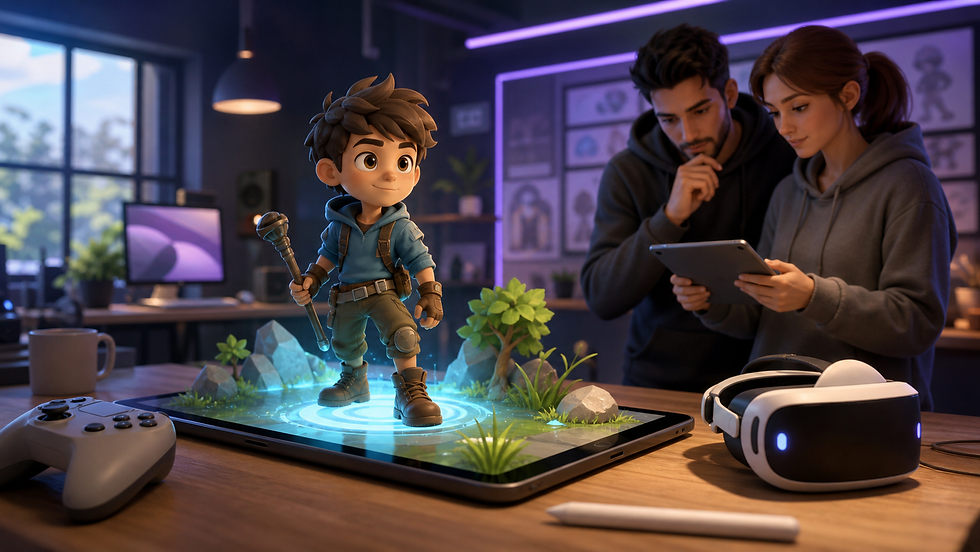
A custom 3D character earns its keep when it can appear across more than one channel. The same core asset can introduce a product, explain a technical idea, perform in a music video, guide a customer through onboarding, represent a brand at an event, or become an interactive avatar on a website.
For marketing teams, 3D characters make abstract ideas easier to remember. A character can show emotion, react to a problem, simplify a feature, and give the audience someone to follow. That is why character-led cartoon explainer videos work well for product education, brand launches, service explanations, and campaign storytelling.
For customer success and learning teams, the same character can support onboarding and training. Instead of sending users through static documentation, a brand guide can demonstrate steps, point out common mistakes, and make learning feel less dry. Mimic Cartoon’s piece on 3D cartoon animation for customer onboarding and training explores that use case in detail.
For entertainment, music, and immersive experiences, characters can become performers. A 3D character can dance, sing, appear in surreal environments, or extend an artist’s visual world without the limits of live-action production. The same thinking applies to games, VR, XR, and interactive events where a character needs to respond, move, or appear in real time.
The newest opportunity is conversational character design. A polished animated avatar can pair with voice, language models, and interaction logic to become a guide or host. If that is part of your roadmap, connect the production plan to Mimic Cartoon’s conversational AI capabilities early so design, rigging, animation, and behavior all support the final experience.
This reuse is also valuable for content calendars. Instead of commissioning unrelated visuals for every announcement, a brand can let its character introduce product updates, answer seasonal questions, star in short clips, or support a launch narrative over several weeks. The character becomes a recognizable thread that ties many small pieces of content together.
How to choose the right 3D cartoon character studio

Choosing a studio is not only about visual taste. The right partner should understand character design, animation performance, technical rigging, production constraints, and the places where the character will be used after launch. A studio that thinks only about the first video may create an asset that is harder to reuse later.
Start by clarifying the character’s job. A brand mascot for short social clips needs a different pipeline from a real-time avatar for an interactive website. A training host needs clear gestures and friendly facial readability. A game character needs efficient assets and movement systems. A music video performer may need more expressive motion capture and cinematic rendering.
Then ask practical production questions. Will you receive the 3D model and rig? Can the character be adapted for future scenes? Is facial animation part of the plan? Are motion capture, 3D scanning, or real-time platform integration available? Can the team support brand films, interactive work, and AI character experiences without rebuilding the asset from scratch?
Mimic Cartoon’s services page is the best starting point if you need the full production path: character creation, 3D animation, motion capture, 3D scanning, VR/XR, and digital character work. You can also review the cartoon character portfolio to see how stylized characters can become polished production assets.
A strong studio will also help you decide what not to overbuild. Some projects need a lightweight character for fast campaign content. Others need a robust rig and reusable animation library. The goal is to match the creative ambition to the technical investment so your character stays useful after the first deliverable is complete.
Finally, look for a studio that can talk clearly about handoff. A custom character may need rendered videos now, but editable source files, animation tests, export formats, or real-time versions later. Discussing those needs early can prevent expensive rebuilds and makes the character a long-term brand asset rather than a beautiful short-term deliverable.
That planning is what separates a campaign character from a real creative platform.
FAQ
What is a custom 3D cartoon character?
A custom 3D cartoon character is an original digital character built in 3D for animation, branding, interactive media, games, videos, or AI avatar experiences.
How long does it take to create a 3D cartoon character?
The timeline depends on complexity, approvals, rigging needs, animation length, and platform requirements. A simple character can move faster, while a reusable animated performer needs more planning.
Can a 3D cartoon character be used in videos and websites?
Yes. A well-built 3D character can be rendered for videos, adapted for websites, used in explainers, and prepared for interactive or real-time environments.
Do I need motion capture for a cartoon character?
Not always. Keyframe animation is often enough for short scenes, but motion capture is useful when the character needs natural body performance, dancing, acting, or fast production of many movements.
What is character rigging?
Character rigging is the process of adding controls to a 3D model so animators can move the body, face, eyes, mouth, and hands in a controlled and expressive way.
Can a brand mascot become an AI avatar?
Yes, if the character is planned for interaction. The model, rig, facial animation, voice, and conversational behavior should be designed together so the avatar feels consistent and responsive.
What industries use custom 3D cartoon characters?
Brands, education, games, music, entertainment, training, product marketing, events, VR/XR, customer support, and AI experience teams can all use custom 3D characters.
How do I start a 3D character project?
Start with the character’s purpose, audience, personality, style references, required deliverables, and future channels. Then speak with a studio that can map those needs to a production pipeline.
Conclusion
Custom 3D cartoon characters give brands a recognizable digital performer that can grow across campaigns, videos, training, games, events, websites, and AI-powered experiences. The best results come from treating the character as a production asset from day one: designed with personality, modeled cleanly, rigged for expression, animated with intent, and prepared for the channels where it will actually appear.
Ready to create a reusable 3D cartoon character for your brand? Explore Mimic Cartoon’s services, review the about page, or contact the team through the site to plan a character that can perform wherever your audience meets you.


Comments