
Motion Capture Suit: How Studios Use Wearable Technology to Animate 3D Characters
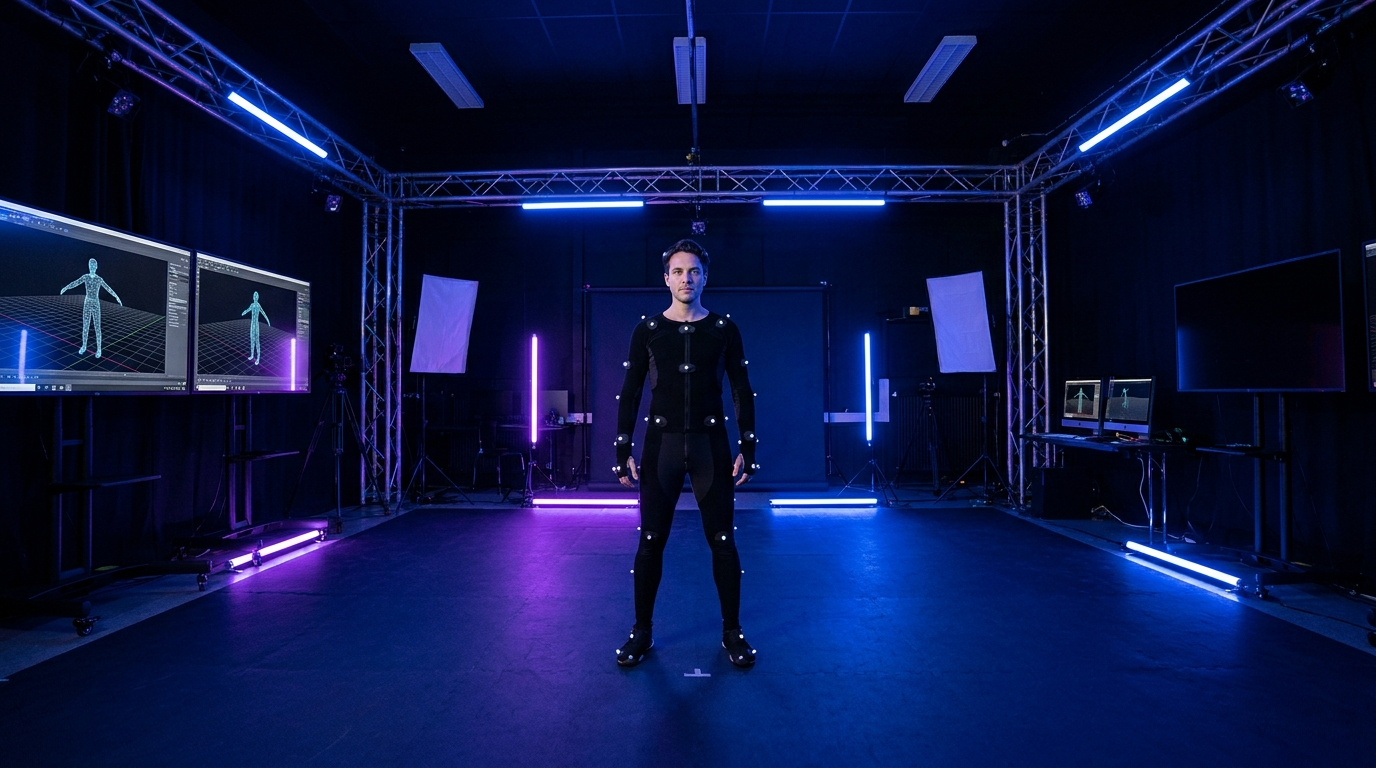
Motion capture suit technology is at the heart of how professional animation studios translate real human performance into 3D character movement. If you have ever watched a cartoon character move with genuine weight, spontaneity, and physical rhythm - the kind of movement that feels lived-in rather than constructed - a mocap suit is usually the reason.
Whether you need a music video character, a game-ready 3D asset, or an interactive AI-driven persona, understanding how motion capture suits work helps you get better results from every production you commission.
Table of Contents
What Is a Motion Capture Suit?
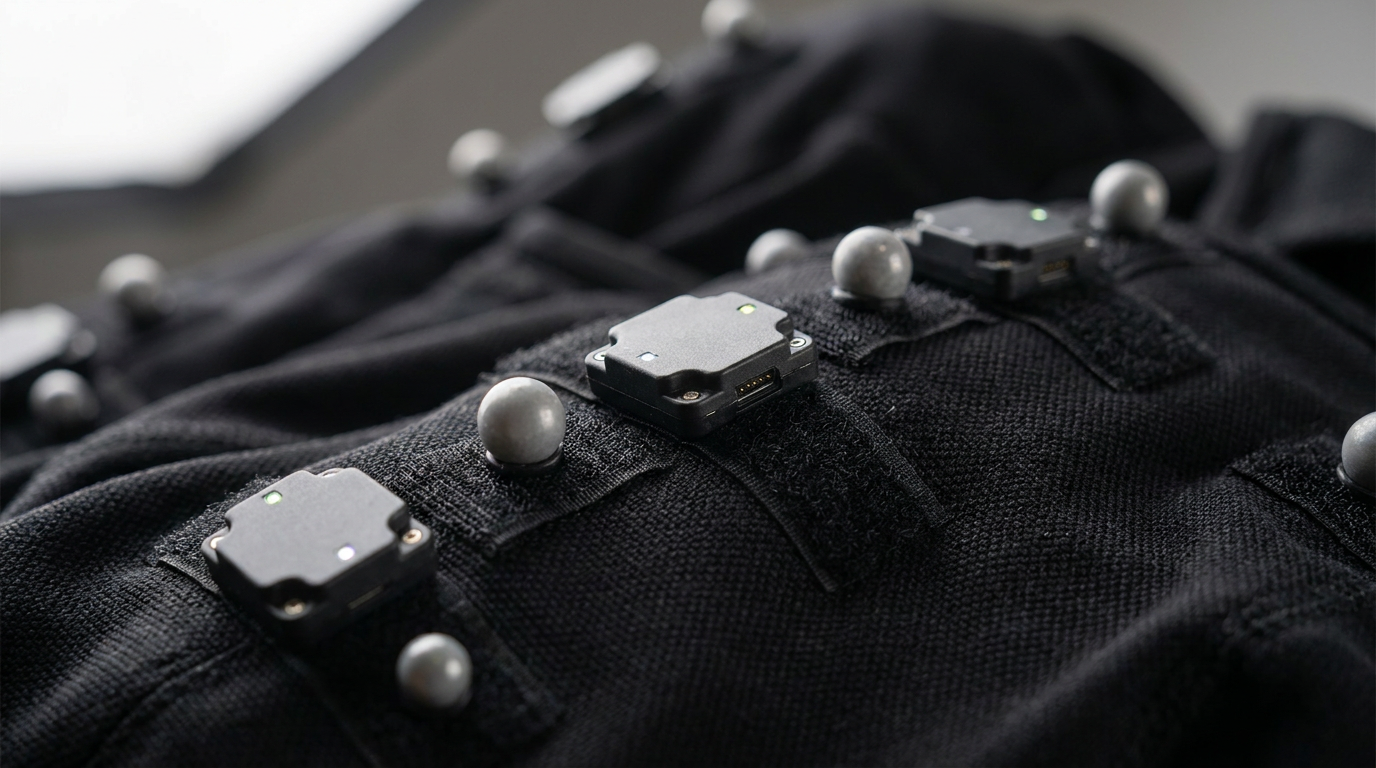
A motion capture suit - also called a mocap suit or performance capture suit - is a wearable system that records the movements of a human performer and converts them into digital data that can drive a 3D character rig. The performer wears a fitted garment embedded with sensors or reflective markers at key anatomical joints: shoulders, elbows, wrists, hips, knees, ankles, and spine.
Every movement the performer makes is tracked in real time - walking, running, jumping, dancing, acting - and each joint position and rotation is recorded as data. That data is then retargeted onto a 3D character model so the character inherits the performer exact motion. The result is animation driven by genuine human physicality.
For a broader understanding of how motion capture fits into the full animation workflow, read our guide on what motion capture means in animation and how it brings characters to life.
How a Motion Capture Suit Works
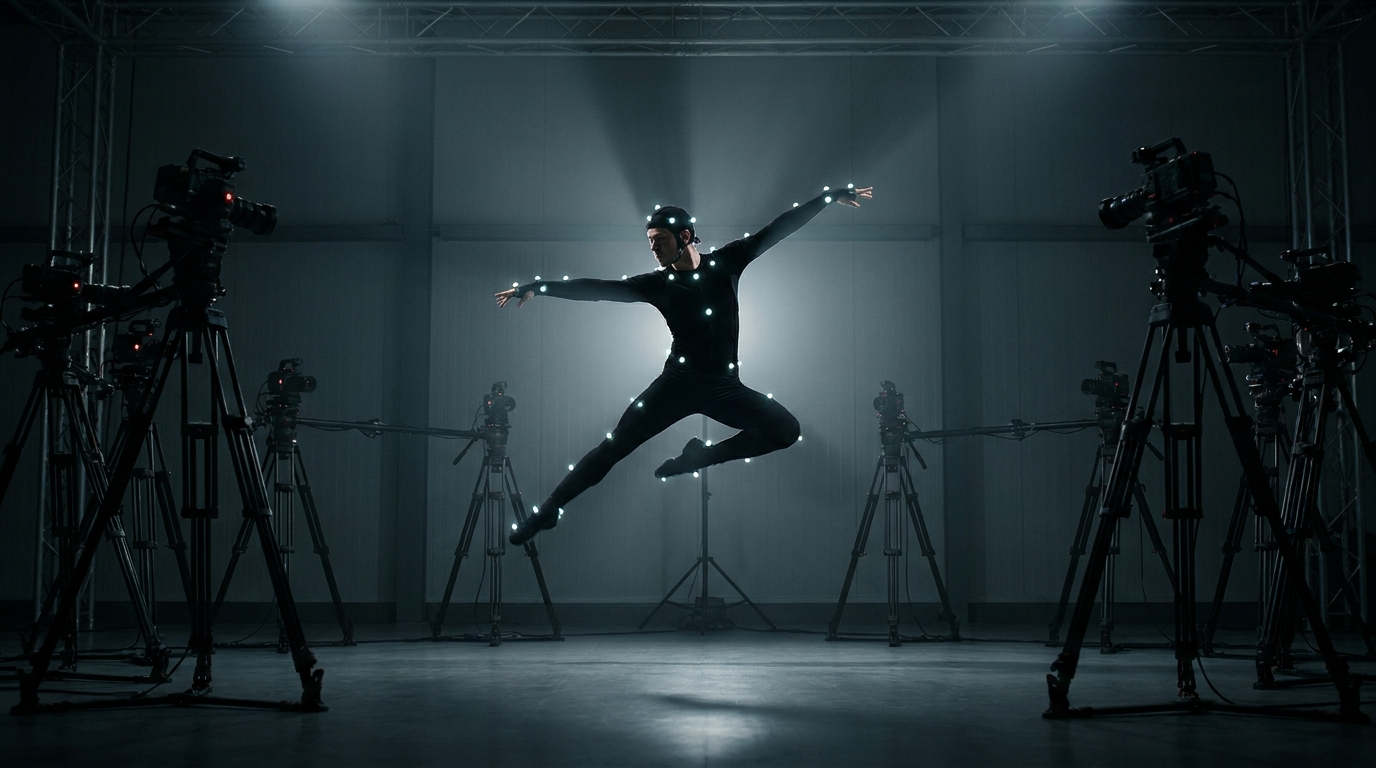
A motion capture suit captures movement through one of two core technologies: optical tracking or inertial sensing. Both record the same essential data - joint positions and rotations over time - but they differ significantly in how they collect it.
Optical Motion Capture
Optical mocap uses reflective markers on the suit and a ring of high-speed infrared cameras positioned around the studio space. The cameras emit infrared light which bounces off the markers and is detected by each camera. Software triangulates the 3D position of every marker from multiple camera angles simultaneously, building a skeletal model of the performer movement at 120 to 240 frames per second.
Optical systems deliver the highest positional accuracy available. They are the industry standard for feature film and game cinematic work where absolute fidelity to performance is required. The trade-off is cost and setup complexity - the camera rigs, calibration process, and studio infrastructure are significant investments.
Inertial Motion Capture
Inertial motion capture uses miniaturised IMU sensors - accelerometers and gyroscopes - sewn into the suit at each joint. Rather than tracking from external cameras, each sensor reports its own orientation and acceleration independently. The data streams wirelessly to a receiver and is assembled into a full-body skeletal reconstruction in real time.
Inertial systems trade some absolute positional accuracy for enormous practical gains: portability, wireless operation, no camera infrastructure, and the ability to capture in any space. For animation studios that need fast turnaround and flexible production environments, inertial suits have become the preferred tool for most content-driven work.
Types of Motion Capture Suits Used in Animation
Professional animation studios work with several categories of motion capture suit depending on the production scale, budget, and technical requirements of the project.
Full-body inertial suits: The most widely used tool in mid-tier and independent animation studios. Cover arms, legs, spine, and hips with IMU sensors. Well-suited to character animation, music video performance, and interactive content pipelines.
Optical marker suits: Used in high-budget feature animation and AAA game studios. Marker placement is precisely mapped to the production character rig for maximum retargeting accuracy.
Facial capture rigs: Separate from body suits, facial capture uses a helmet-mounted camera or facial marker grid to record expression data alongside body performance.
Gloves and finger trackers: Extension attachments that capture individual finger articulation, enabling detailed hand performance for close-up character interaction shots.
Full-performance capture: Combines body, face, and hand capture simultaneously for high-fidelity character work where every nuance of the performer matters.
Our Berlin studio uses professional-grade motion capture and 3D scanning equipment for all character productions. Learn more about the technology we operate on our motion capture and 3D scanning technology page.
Motion Capture Suits in 3D Animation Production
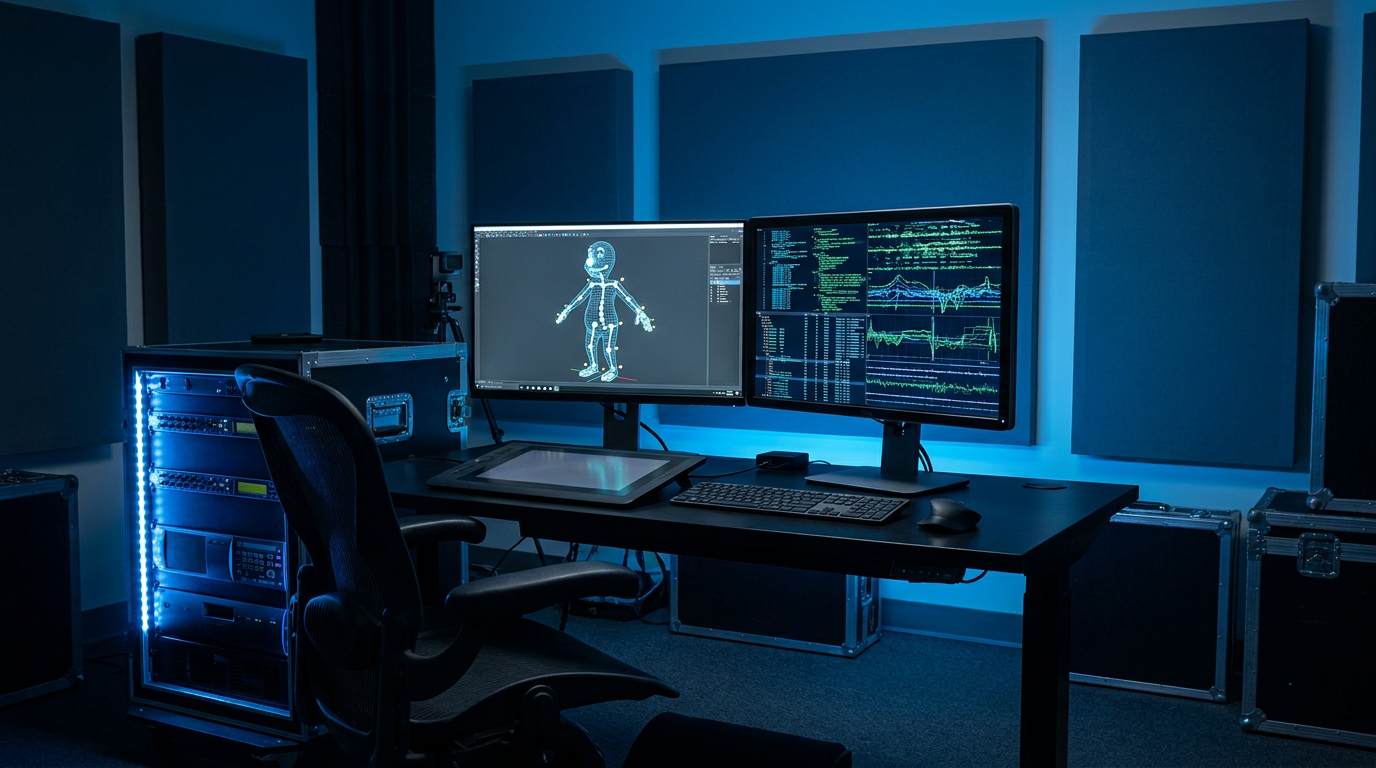
Inside a professional animation production pipeline, the motion capture suit is one part of a larger workflow. The suit records the performance - but significant technical work is required before and after the capture session to integrate that data into the final animated output.
Pre-Capture: Rig Preparation and Performer Direction
Before any performer steps into a mocap suit, the 3D character rig must be set up to receive the incoming data. The animator configures a retargeting map that connects the real-world joint hierarchy captured by the suit to the custom control structure of the 3D character. If this mapping is misaligned, the character will move incorrectly regardless of how clean the capture was.
Performer direction also happens in pre-production. Unlike a camera shoot, motion capture direction focuses on the physical qualities of the movement - the timing of a stride, the weight of an arm raise, the rhythm of a reaction. These physical parameters are what audiences actually feel when they watch a character perform.
Post-Capture: Cleanup and Retargeting
Raw mocap data from the suit is rarely used directly. Contact with the ground introduces foot-sliding artefacts. Sensor drift accumulates over long takes. Extreme poses create gimbal lock in joint rotations. Post-capture cleanup in specialised software removes these artefacts and locks the movement to the character rig proportions.
Once cleaned, the data is retargeted - applied to the 3D character so the character moves with the performer timing and quality while respecting its own body proportions. A performer who is 1.8m tall driving a character with exaggerated proportions requires careful retargeting to preserve the intention of the performance.
For a detailed look at how this fits into the complete animation process, read our article on 3D character animation and how studios bring characters to life.
Motion Capture Suits for Music Video Production
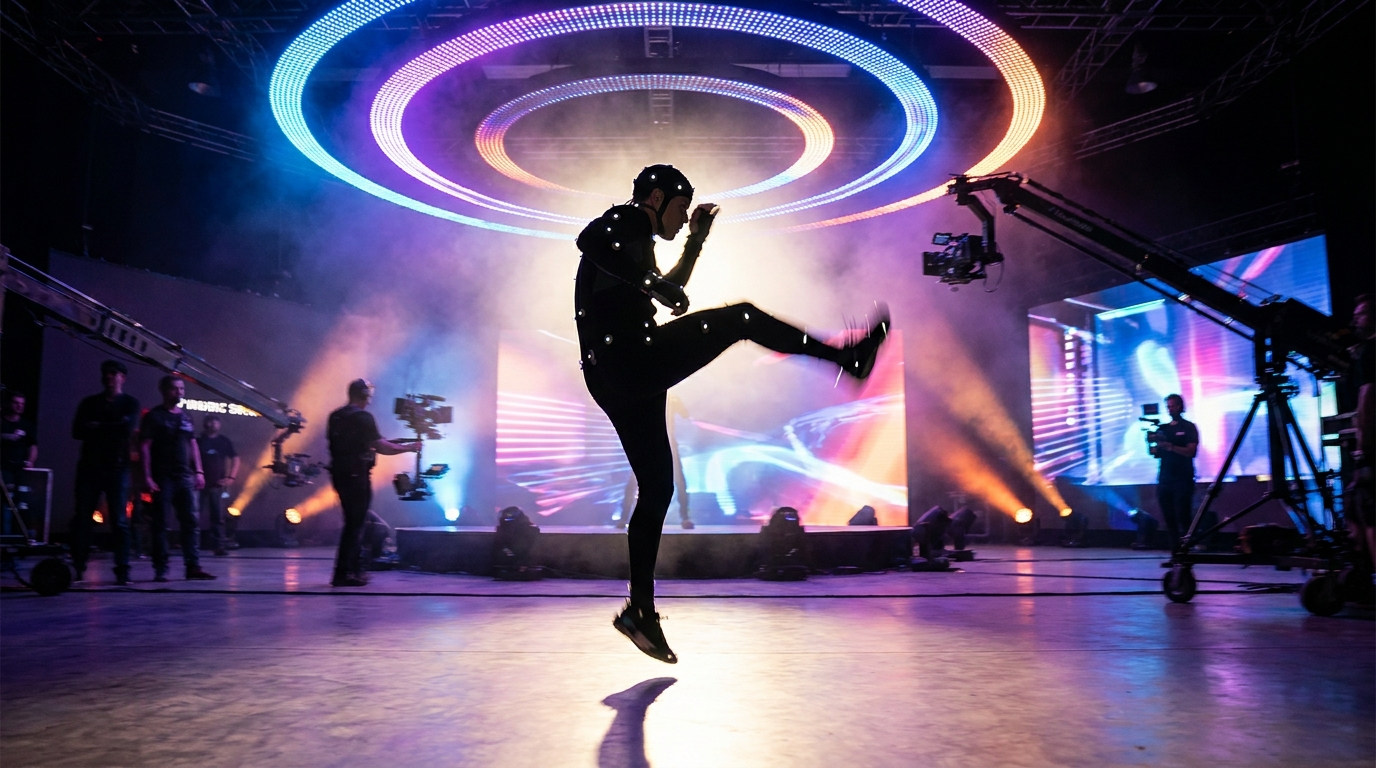
Music video production is one of the highest-demand use cases for motion capture suit technology. The relationship between human physical performance and music is built on qualities that are extraordinarily difficult to manufacture through pure animation: spontaneous timing, physical improvisation, and the micro-rhythms of a performer moving to a beat they are actually hearing.
When a musician or dancer performs in a mocap suit, those qualities transfer directly to the 3D character. The character moves to the music because a real performer moved to that exact music. The pauses, the anticipations, the moments where the performer leans into the next beat - all of it records onto the suit data and retargets onto the cartoon character.
This is what separates motion capture-driven music video animation from manually keyframed alternatives. Both can achieve technically competent results. Only motion capture can capture the authenticity of a real performer relationship to a specific track.
Read more about how 3D cartoon characters are being used in modern music video production in our deep-dive on music video animation and how 3D cartoon characters are transforming the industry.
Keyframe Animation vs Motion Capture
Both keyframe animation and motion capture are valid production approaches, and professional studios use both - sometimes within the same production. The decision depends on what the animation needs to communicate.
Choose motion capture when: the performance needs to feel like a specific real person moving; the character dances, fights, or performs with a specific musical relationship; speed of production matters; multiple complex scenes need to be produced from a single capture session.
Choose keyframe animation when: the character movement needs to be highly exaggerated or physically impossible; the stylisation is so extreme that human proportions no longer apply; there is no performer available; the action is abstract or illustrative rather than performance-based.
Combine both when: motion capture drives the body movement and animation is layered on top for secondary motion, facial performance, or stylistic exaggeration. This hybrid approach is used in most professional studio productions.
Understanding the difference between these two approaches also informs the broader choice between 2D and 3D animation and between CGI and traditional animation techniques.
Frequently Asked Questions
1. What is a motion capture suit made of?
A motion capture suit is typically made from tight-fitting stretch fabric similar to a compression garment. Inertial suits have IMU sensor pods sewn into specific joint positions - shoulders, elbows, wrists, chest, hips, knees, ankles, and feet. Optical suits have reflective marker balls attached at calibrated anatomical positions. Some suits also include facial capture rigs and finger tracking gloves as optional extensions.
2. How accurate is a motion capture suit?
Professional inertial suits capture joint rotations with accuracy to approximately 0.5-1 degree under good conditions. Optical systems achieve sub-millimetre positional accuracy with properly calibrated camera rigs. Both are more than sufficient for animation production. Real-world accuracy varies with calibration quality, environmental interference, and the length of the capture session.
3. How much does a motion capture suit cost?
Consumer-grade inertial suits start at around USD 2,000-3,000. Mid-tier professional inertial suits range from USD 6,000-20,000. High-end optical capture systems with full camera infrastructure can cost USD 50,000 to several hundred thousand dollars. Most animation studios use a combination of owned equipment and production-day rates at specialist capture stages.
4. Can a motion capture suit capture facial expressions?
Body suits do not capture facial expressions - that requires a separate facial capture system. Facial rigs typically use a helmet-mounted camera tracking facial markers on the performer face, or an array of cameras positioned at close range. Full-performance capture combines both systems simultaneously.
5. What software is used with a motion capture suit?
Common software for processing inertial mocap data includes Rokoko Studio, Xsens MVN Analyze, and Perception Neuron software. Optical data is typically processed in Vicon Shogun or OptiTrack Motive. The resulting skeletal data is then imported into Autodesk Maya, Blender, or Unreal Engine for retargeting and cleanup.
6. How long does a motion capture session take?
A typical production day runs 8-10 hours and can capture 20-50 minutes of usable performance depending on the complexity of the scenes. Suit calibration at the start takes 15-30 minutes. Individual takes run 1-5 minutes with multiple takes recorded per scene. Post-processing and retargeting is done after the session.
7. Do you need actors or dancers for motion capture?
Professional studios work with both trained actors and trained dancers depending on what the project requires. Music video productions often use the original artist or a performance double. Character animation for games and film typically uses stunt performers or trained actor-athletes who combine expressive acting with physical precision.
8. Can I use a motion capture studio for my music video or animation project?
Yes - professional studios like Mimic Cartoon provide access to full motion capture facilities as part of a production package. You do not need to own the equipment. The studio handles calibration, direction, data processing, and retargeting onto your 3D character. Visit our character animation and motion capture services page to see how we work.
Work with a Professional Motion Capture Studio
Mimic Cartoon operates professional motion capture equipment at our Berlin studio. Whether you need a music video character, a game-ready animated asset, an AI-driven interactive persona, or a reusable 3D character for long-term content production - we handle the full pipeline from suit calibration through final delivery. Explore our character animation and motion capture services or learn more about our studio on the about page to start the conversation.


Comments