What is lip sync animation?
Lip sync animation aligns mouth shapes and facial movement with recorded speech. Artists use the sounds, rhythm and emotion of the dialogue to time the performance. Automated tools can provide a starting pass, but timing, expression and the character’s design still need review, especially across languages.
Continue with Facial Animation for 3D Cartoon Characters and Cartoon Character Rigging Explained.
Approve dialogue before polishing the mouth animation
Check the script, pronunciation, voice recording and shot timing before the final lip-sync pass. If a line changes, review the facial performance and edit together rather than replacing mouth shapes in isolation. The animatic planning guide explains timing approvals, while the character development guide connects the delivery to the character's intent.
Why do some animated characters feel like they are speaking while others only appear to open and close their mouths?
Lip sync animation combines speech timing, mouth shapes, facial expression and character acting. The technical match between sound and image matters, but the audience believes the dialogue when the face and body appear to think the words.
This guide explains how to prepare audio, build mouth shapes, animate performance, use automation and capture, review localization and integrate lip sync into a professional 3D character pipeline.
Table of Contents
How speech becomes a facial performance
Lip sync animation is the process of matching a character's mouth, jaw, face and performance to recorded dialogue. The animator translates speech sounds into visible shapes while preserving the character's emotion, personality and design.
Good lip sync does not assign one rigid pose to every letter. Speech is continuous: sounds overlap, the mouth anticipates the next word and facial movement changes with speed, emphasis and feeling. The audience reads the complete performance rather than a mechanical sequence of phonemes.
In 3D production, lip sync depends on clean audio, a suitable facial rig, approved character shapes and shot context. A close-up needs more subtle articulation than a wide shot, while a stylized mascot may use simpler, stronger mouth poses.
Facial animation connects speech with eyes, brows, cheeks, head movement and body language. The broader facial animation workflow shows how these systems support expressive character storytelling beyond the mouth alone.
The goal is readable dialogue that feels motivated by thought. Technical accuracy supports that goal, but performance makes the character believable.
Prepare Dialogue Before Animating
Lock the script and recording as early as possible. Even a small wording change can alter timing, mouth shapes, breaths and editing. Use temporary dialogue for layout, then update animation only after the approved performance is available.
Record in a quiet environment with consistent levels and minimal room noise. Keep the actor's natural breaths and useful efforts when they support the scene. Supply pronunciation references for names, invented words, accents and technical language.
Break the track into shots and mark words, pauses, breaths, stresses and emotional changes. A waveform is useful for timing, but animators should listen repeatedly and study the meaning rather than place poses from the waveform alone.
An animation brief should define audience, tone, character, language versions, frame rate, shot lengths and approval responsibilities. Clear inputs prevent the lip-sync pass from becoming the place where story and performance questions are solved too late.
If the project will be localized, retain clean dialogue stems and plan enough editorial flexibility for languages with different duration and rhythm.
Design Mouth Shapes and the Facial Rig
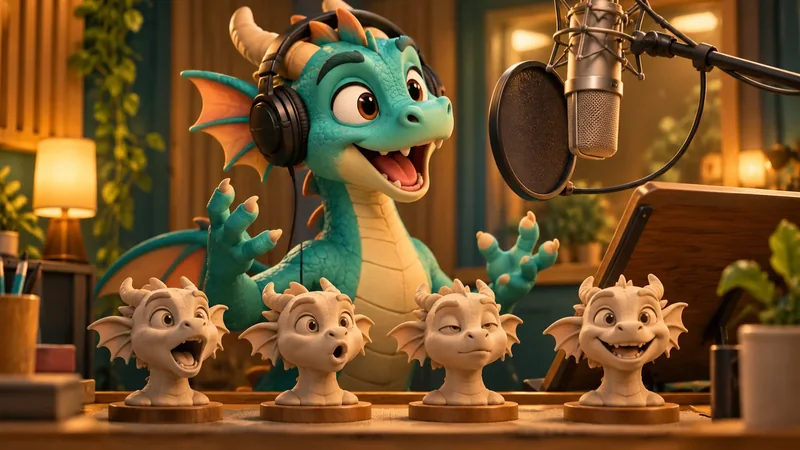
A lip-sync rig needs controls or blend shapes for the speech range the character will perform. Common groups represent closed lips, wide vowels, rounded vowels, teeth-to-lip sounds, tongue contacts and open jaw positions. The exact set should follow the language, style and production needs.
Design shapes for the character rather than forcing realistic anatomy onto every model. A character with a muzzle, beak, tiny mouth or graphic face may communicate speech through simplified poses, cheeks, jaw, head motion or secondary features.
Test transitions between shapes, not only the poses themselves. Extreme forms can look correct in isolation but collapse, intersect or lose volume during fast dialogue. The rig should allow asymmetry and small adjustments so the animator can avoid a stamped appearance.
Cartoon character rigging connects mouth controls with jaw, cheeks, lips, tongue, eyes and brows. Early tests should cover whispers, shouts, smiles, clenched speech and rapid phrases before production shots begin.
Modeling and topology also affect deformation. Professional 3D character modeling services should plan facial edge flow and shape targets around the intended performance range.
Animate Speech as a Character Performance
Begin with the scene's thought and emotional change. Block the character's gaze, head rhythm and major facial beats before polishing individual sounds. This gives the dialogue intention and prevents the mouth from moving independently of the rest of the character.
Choose the strongest mouth poses and hold them long enough to read. Not every sound needs a separate key. Favor stressed syllables, visible consonants and important vowels, then let interpolation and hand-shaped transitions carry the less important material.
Anticipate visible sounds slightly when needed because viewers often perceive the mouth shape just before the audio peak. The amount depends on frame rate, edit, character style and shot size. Review at full speed rather than judging only frame by frame.
Use blinks, eye darts, breathing and posture with restraint. These cues should reveal thinking and reaction, not decorate every pause. Character development guides the choices: a confident mascot, nervous child and tired worker should not share the same dialogue rhythm.
Keep silhouettes and staging clear. A beautifully animated mouth cannot rescue a face hidden in shadow, turned away at the wrong moment or framed too small for the required articulation.
Use Automation and Motion Capture With Human Direction
Automatic lip-sync tools can analyze audio and generate a first pass from a phoneme map. They are useful for previews, long-form dialogue, interactive characters and language versions, but the result still needs review for timing, emphasis, deformation and emotion.
Treat automation as editable animation. Correct repeated mouth shapes, add holds, reduce noise and restore asymmetry. Generic analysis may misread accents, singing, whispered speech, invented words or dialogue mixed with music.
Facial capture can preserve performance timing, but retargeting must respect the character's proportions and style. A human actor's subtle lip motion may disappear on a broad cartoon face, while direct transfer of every micro-movement can create distracting noise.
Motion capture brings useful body rhythm and facial reference into animation when teams calibrate the performer, capture cleanly and retarget selectively. The animator remains responsible for readable poses and character appeal.
Store the generated or captured source separately from the approved animation. This preserves traceability and lets teams improve the final performance without overwriting the original evidence.
Review, Edit and Localize Lip Sync
Review lip sync in the edited shot with final or representative sound. Camera cuts, reaction shots, music and effects change what the audience notices. A mouth animation that appears late in isolation may read correctly after editorial context is restored.
Use structured review passes. First confirm dialogue timing and meaning, then check readable mouth shapes, emotion, eye focus, deformation and continuity. Separate notes reduce contradictory fixes and keep teams from polishing a shot whose timing is still changing.
Storyboards and animatics establish dialogue duration, shot size and performance beats before detailed animation. They are the cheapest stage for resolving whether the audience can see the speaking character at the moment a line matters.
Localization may require new timing, performance and mouth-shape passes rather than stretching the original animation. Work with native speakers to confirm pronunciation, emphasis and cultural tone. Decide whether each market uses full lip sync, adapted sync or a more economical dub style.
Track language, audio version, frame range, reviewer and approval state for every shot. Clear versioning prevents an approved animation from being paired with the wrong recording during final delivery.
Integrate Lip Sync Into the Animation Pipeline
Plan lip sync milestones inside the full 3D animation pipeline: script, voice casting, recording, edit, rig test, blocking, facial pass, review, lighting and delivery. Late audio changes should trigger a visible schedule and cost decision.
Create reusable character tests with common phrases, emotions and extremes. These clips validate the rig, establish style and help new animators understand how much articulation the production expects.
For animated brand characters, define voice and performance rules alongside visual guidelines. Approved pronunciation, energy, humor, expressions and prohibited uses keep the character consistent across social edits, explainers and interactive content.Animated brand characters
Cartoon explainer videos may prioritize clarity, friendly pacing and strong key poses, while entertainment scenes can support subtler acting. Match the polish level to shot purpose and audience distance.
Deliver approved animation with final audio references, frame rate, handles, language labels, rig version and notes about any remaining limitations. A clean handoff protects the performance through lighting, rendering and editorial.
Lip Sync Animation FAQ
What is lip sync animation?
Lip sync animation matches a character's mouth, jaw, facial expression and performance to recorded dialogue so speech appears believable and emotionally connected.
What are mouth shapes in animation called?
They are often called visemes. A viseme represents a visible speech shape and may cover several related phonemes or sounds.
How many mouth shapes are needed for lip sync?
The number depends on language, style and shot quality. A simple cartoon may use a compact set, while close-up 3D performance needs more flexible shapes and transitions.
Does every letter need its own mouth pose?
No. Speech sounds overlap, and many letters share similar visible shapes. Animators focus on readable phoneme groups, stressed syllables and natural transitions.
Can AI automate lip sync animation?
AI can generate a useful first pass from audio, but human review is still needed for performance, timing, pronunciation, style and facial deformation.
How does facial motion capture help lip sync?
Facial capture preserves an actor's timing and movement. Artists then retarget and edit it to fit the character's anatomy, rig and animation style.
How long does lip sync animation take?
Time depends on dialogue length, shot size, style, rig quality, automation, revisions and localization. Close-up emotional performance requires more work than distant speech.
How is lip sync localized into another language?
Teams record the translated performance, adjust timing and animate or revise mouth shapes for the new pronunciation. Native review confirms language and emotional accuracy.
What makes lip sync look unnatural?
Common causes include equal movement on every sound, late timing, repeated poses, poor transitions, weak jaw motion, missing emotion and movement disconnected from the eyes or body.
What should a lip sync delivery package include?
Include approved animation, final dialogue references, frame rate, shot handles, language labels, rig version, review status and any known limitations.
Quality control should include slow review for intersections and shape problems, full-speed playback for performance, and muted playback to test whether the facial intention still reads. Review on the intended delivery screen because subtle articulation can disappear on mobile while exaggerated shapes may feel distracting in a cinema close-up.
Keep a short approved reference sequence for every recurring character. It should show the preferred mouth range, jaw behavior, blinking, emotional intensity and timing style. New shots and language versions can then be judged against a shared performance target rather than individual taste.
Conclusion: Animate the Thought Behind the Words
Strong lip sync begins with approved dialogue and a capable facial rig, then grows through timing, emotion, review and careful integration with the entire character performance. Automation can accelerate the first pass, but an animator gives the speech intention, appeal and style.
Ready to turn an original 3D character into a convincing speaking performer? Explore Mimic Cartoon and discuss your animation project.