How do VFX and animation differ?
Animation creates movement, including character performance and moving objects. Visual effects (VFX) create or combine imagery for a finished shot, often integrating filmed footage with digital elements. Animation can be part of VFX, while a fully animated film also uses effects and compositing. The two disciplines overlap but describe different parts of production.
Continue with CGI vs Animation: Differences & Examples and 3D Animation Pipeline: Brief to Delivery.
Imagine a scene: a brave little squirrel pilot swoops through a storm, cheeks puffed with determination, goggles fogging up, tail whipping like a flag. The emotion comes from the squirrel’s performance, but the storm, the lightning, the sense that the air is heavy and dangerous, that’s a different kind of magic at work.
That’s why the difference between VFX and animation matters, especially when you’re building stories that need both heart and spectacle. Animation gives characters their soul. VFX makes the world behave, shimmer, explode, melt, glow, and occasionally try to eat the hero.
At Mimic Cartoon, we treat them like two members of the same film crew: one is the actor’s coach (animation), the other is the world’s wizard (VFX).
Table of Contents
VFX: The World’s Rules and Illusions
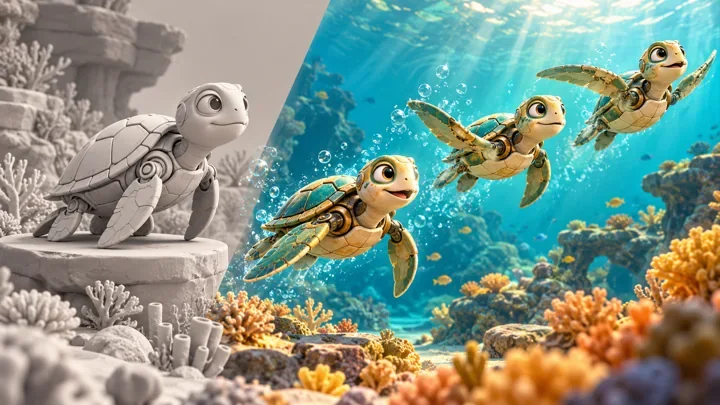
VFX (visual effects) is what you use when the story demands something the camera, or the base render, can’t capture on its own. It’s the craft of building believable moments out of layers: simulations, compositing, lighting tricks, and digital enhancements that make a scene feel bigger, richer, or more real (even when the world is totally made up).
In storytelling terms, VFX is the atmosphere and consequence.
It answers questions like:
What does this world feel like when it rains glitter instead of water?
How does magic affect the environment?
What happens when a giant robot lands and the ground should react?
Common VFX story jobs include:
Environmental effects like fog, dust, rain, snow, embers, and wind trails
Simulations like fire, explosions, water splashes, cloth turbulence, and debris
Compositing that stitches layers together so everything belongs in one reality
Clean up and enhancement such as removing distractions, adding depth, and polishing lighting
Invisible realism that makes a scene feel physically grounded without screaming “effects”
When VFX is done well, you don’t notice it. You just believe the moment.
Animation: Performance, Personality, and Timing
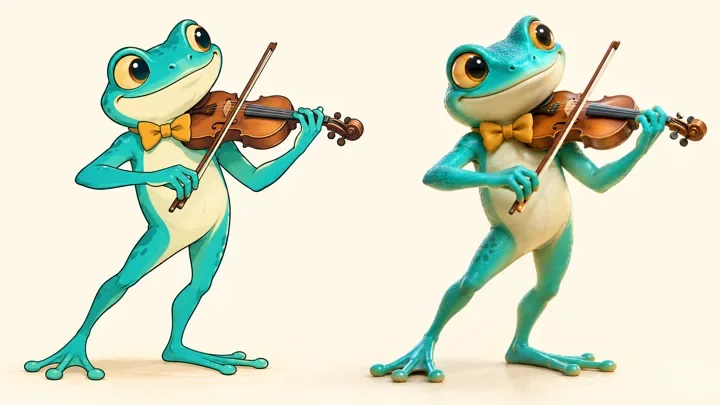
Animation is the art of giving life to characters (and sometimes objects) through movement, expression, and timing. If your character is the storyteller’s voice, animation is the delivery: the pause before a confession, the hop of excitement, the slump of heartbreak, the blink that says, “I’m trying not to cry.”
In storytelling terms, animation is emotion in motion.
It answers questions like:
Who is this character when nobody is watching?
How do they move when they’re confident, versus scared?
What does their body do before their mouth admits the truth?
Key animation story tools include:
Acting beats: anticipation, reaction, hesitation, realization
Body language: posture, weight shifts, nervous fidgets, heroic stances
Facial performance: brows, eyes, mouth shapes, micro expressions
Timing and rhythm: comedy timing, dramatic holds, snappy energy bursts
Style choices: squash and stretch, snappy poses, smooth realism, cartoony exaggeration
And when you bring in motion capture, you get a special kind of spark: real human nuance translated into an expressive character performance, then stylized to match the world. That’s where classic cartoon charm and modern 3D realism shake hands like old friends.
How to Choose: What the Story Needs Most
The easiest way to understand the difference between VFX and animation is to ask one simple question:
Are we trying to make the audience feel something, or believe something? (Usually both, but one tends to lead.)
Use animation when the story hinges on:
A character’s transformation (emotion, courage, trust, identity)
Comedy driven by timing and personality
A relationship told through gestures, not speeches
A hero’s inner world showing up in their movement
Use VFX when the story hinges on:
A world that reacts (storms, magic, disasters, sci-fi tech)
Scale and spectacle (giant creatures, collapsing cities, portal openings)
Mood and atmosphere (misty forests, neon haze, enchanted particles)
Physical cause and effect (dust trails, splashes, impacts, destruction)
And when you need the full cinematic meal, you blend them:
Animation sells the character’s choice to jump.
VFX sells the wind pressure when they leap off the airship.
That blend is where story becomes sensation.
Comparison Table
Category | Animation | VFX (Visual Effects) |
Main purpose | Bring characters (and performances) to life | Enhance or create phenomena and realism in the world |
Story role | Emotion, personality, acting, timing | Atmosphere, impact, spectacle, physical reactions |
Typical focus | Poses, facial expressions, body language, pacing | Simulations, compositing, lighting effects, environmental layers |
Best for | Character driven scenes, comedy, heartfelt moments | Storms, magic, explosions, realism polish, scale |
What you feel | “I know who this character is.” | “I believe this world is real.” |
Common tools | Keyframe animation, rigs, motion capture, performance polish | Simulation tools (fire, water, cloth), compositing, FX layers, rendering passes |
Biggest risk | Movements feel stiff or unmotivated | Effects feel distracting, fake, or overpower the scene |
Applications Across Industries
Whether you’re building a mischievous mascot, a bedtime series hero, or an interactive guide who lives inside an app, understanding the difference between VFX and animation helps you choose the right storytelling ingredients.
Here’s how these crafts show up across industries:
Kids’ content and family entertainment: expressive character animation for comedy and warmth, plus gentle VFX for magical moments
Films and series: cinematic acting plus atmospheric effects that build believable worlds
Education: clear animated demonstrations, with VFX highlights that guide attention (sparkles, outlines, callouts)
Games and interactive media: animation for readable character movement; VFX for feedback (hits, power ups, environment responses)
Brand characters and mascots: personality forward animation, with VFX that adds polish and surprise to reveals
Social content and shorts: punchy animation timing paired with quick VFX accents for scroll stopping energy
If you’re exploring character driven pipelines, our craft lives across a few key corners of the studio: the behind the scenes workflow world in Tech, the practical build paths in Services, and the people and story heart in About Mimic Cartoon. For style decisions, it also helps to explore how different looks change readability in Types of cartoon styles, and how dimensional choices shift both mood and production in Difference between 2D and 3D animation.
Benefits
When VFX and animation each stay in their storytelling lane, you get a production that feels effortless, even when it’s doing backflips.
Benefits of strong animation:
Characters feel alive, likable, and memorable
Comedy lands cleaner (timing is everything)
Emotional scenes feel honest, not posed
Movement becomes storytelling, not just motion
Benefits of strong VFX:
Worlds feel immersive and tactile
Magic and sci-fi feel believable (with clear rules)
Action gains weight, impact, and consequence
The final image feels polished and cinematic
And when they’re paired thoughtfully, the audience experiences a single seamless reality, where a character’s emotions and the world’s reactions speak the same language.
Challenges
These crafts are powerful, which means they can also accidentally steal the spotlight from the story if handled without a steady storytelling compass.
Animation challenges:
Over animating: too much movement can dilute emotion
Under animating: stiff timing can flatten personality
Style mismatch: realistic motion in a cartoony world can feel off
Performance clarity: the audience must read intent instantly
VFX challenges:
Visual noise: too many particles, glows, or layers distract from the character
Weightlessness: effects that don’t obey the scene’s physics break belief
Overpowering the moment: spectacle can swallow the emotional beat
Consistency: lighting and integration must match the world’s logic
In practice, the safest rule is: the character’s choice comes first, then the world reacts in a way that supports it.
Future Outlook
The next wave of storytelling isn’t just “more effects” or “faster animation.” It’s smarter collaboration between performance and world building, especially as characters travel across platforms: shows, games, apps, web experiences, and interactive companions.
Here’s what’s shaping the road ahead:
AI assisted creativity used gently: helping with iteration and exploration, while artists steer the emotion and style
Real time workflows: faster previews so directors can test story beats before final renders
Better motion capture pipelines: more nuanced acting that can still be stylized into cartoony charm
Stylized realism: believable physics with expressive exaggeration (a sweet spot for lovable 3D characters)
XR and immersive spaces: characters and effects that respond to the viewer’s presence, not just a fixed camera
Through all of it, the difference between VFX and animation stays important, because the tools may evolve, but the audience will always chase the same thing: a character they care about, in a world they believe.
FAQs
What is the difference between VFX and animation in simple terms?
Animation is how characters (and objects) perform through movement, acting, and timing. VFX is how the world is enhanced or created through storms, magic, explosions, compositing, and realism polish.
Is CGI the same as VFX?
Not exactly. CGI means computer generated imagery, which can include animated characters, environments, or objects. VFX is the broader craft of integrating and enhancing visuals, often using CGI as one ingredient.
Can animation exist without VFX?
Yes. Many character driven films, shorts, and cartoons rely mostly on animation. Still, even simple projects may use light VFX for polish, like glow, dust, or compositing passes.
Can VFX exist without animation?
Yes. VFX can enhance live action footage (like adding a storm, removing objects, or extending a set) without character animation being the focus.
Which one is more important for storytelling?
Neither wins every time. If the story is character led, animation often carries the emotional weight. If the story depends on world events or spectacle, VFX may lead. The best projects let story decide.
What does motion capture belong to, VFX or animation?
Motion capture usually belongs to animation because it captures performance and movement. It also connects to VFX when simulations or effects need to react to that motion (cloth, dust, impacts).
How do I know if my project needs VFX, animation, or both?
Ask what the audience must understand first: the character’s feelings (animation) or the world’s reality (VFX). If your key moments involve both a strong performance and world reactions, you’ll likely need both.
Does 3D scanning replace animation or VFX?
No. It supports them. 3D scanning can provide a grounded base for shapes, textures, or reference. Animation still creates performance, and VFX still creates environmental behavior and integration.
Conclusion
A story is a living thing. It breathes through characters, and it echoes through worlds. Animation is the breath: tiny pauses, bold gestures, laughter that pops like a bubble. VFX is the echo: thunder after a brave choice, shimmer when magic answers, dust that proves a giant really did just land.
When you truly understand the difference between VFX and animation, you stop treating them like separate departments and start treating them like two storytellers sharing the same campfire. One tells the tale with movement and emotion. The other paints the night sky above it.
And when both serve the story, the audience doesn’t just watch. They feel it.